Table of Contents
Maintaining a healthy digestive system is essential for overall well-being. From absorbing nutrients to supporting immunity, your gut plays a crucial role in keeping your body functioning properly. However, modern eating habits, processed foods, and irregular meal timings often lead to digestive issues like acidity, bloating, gas, constipation, and indigestion.
If you’re searching for the best foods for healthy digestion, this expert-backed guide will help you understand what to eat, what to avoid, and how to build a gut-friendly diet that works for your lifestyle.
Best foods for digestion include:
- Fiber-rich foods (vegetables, fruits, whole grains)
- Probiotic foods (curd, buttermilk, yogurt)
- Hydrating foods (cucumber, watermelon)
- Ginger and herbal ingredients
- Healthy fats (nuts, seeds, olive oil)
These foods improve gut health, support digestion, reduce acidity, and prevent bloating.
Why Digestive Health Matters
Your digestive system breaks down food, absorbs nutrients, and eliminates waste. Poor digestion can lead to:
- Acid reflux and heartburn
- Gas and bloating
- Constipation
- Nutrient deficiencies
- Weak immunity
A well-balanced digestive diet can prevent these issues naturally without heavy medication.
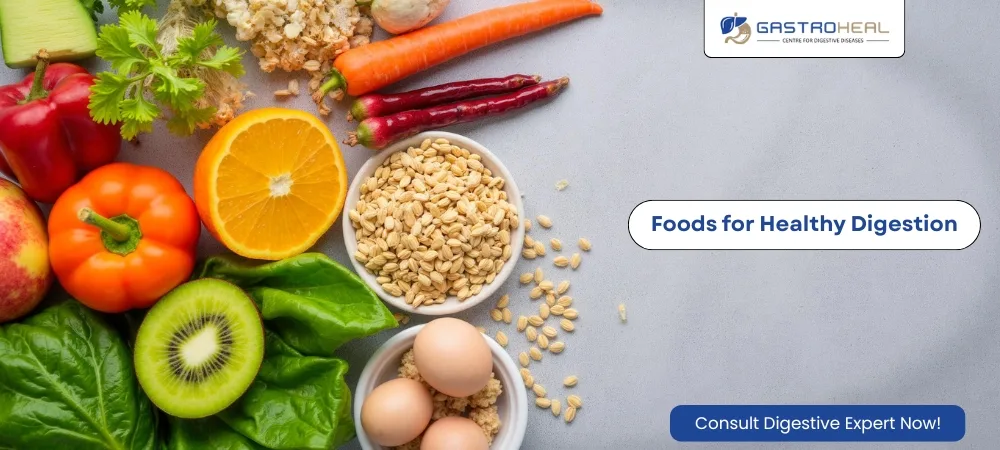
Top 15 Best Foods for Healthy Digestion
1. Yogurt (Curd) – Natural Probiotic
Curd contains beneficial bacteria that improve gut flora and aid digestion.
Benefits:
- Improves gut bacteria
- Reduces bloating
- Helps in lactose digestion
2. Buttermilk – Cooling & Digestive Booster
A traditional Indian drink, buttermilk helps balance stomach acids.
Best for:
- Acidity relief
- Summer digestion issues
3. Fiber-Rich Vegetables
Vegetables like spinach, carrots, broccoli, and beans are rich in fiber.
Benefits:
- Prevent constipation
- Improve bowel movement
- Support gut microbiome
4. Fruits Rich in Fiber & Water
Papaya, banana, apple, and pear are excellent for digestion.
Why important:
- Papaya contains digestive enzymes
- Banana soothes the stomach
5. Whole Grains
Oats, brown rice, and whole wheat improve digestive efficiency.
Benefits:
- High fiber content
- Keeps gut active
6. Ginger – Natural Digestive Healer
Ginger is widely used to treat nausea and indigestion.
Helps in:
- Reducing inflammation
- Boosting digestion
7. Cumin Seeds (Jeera)
Jeera water is a traditional remedy for digestion.
Benefits:
-
- Reduces gas
- Improves metabolism
8. Hydrating Foods
Cucumber, watermelon, and coconut water keep the digestive system hydrated.
Why:
- Prevents constipation
- Flushes toxins
9. Nuts & Seeds
Almonds, flaxseeds, and chia seeds provide healthy fats and fiber.
Benefits:
- Improve gut movement
- Reduce inflammation
10. Green Tea & Herbal Teas
Herbal drinks help soothe the digestive tract.
Useful for:
- Reducing bloating
- Improving metabolism
11. Garlic
Garlic acts as a natural prebiotic.
Helps:
- Boost gut bacteria
- Improve immunity
12. Fermented Foods
Idli, dosa, and pickles support gut bacteria.
Why:
- Improve digestion naturally
13. Lean Proteins
Chicken, fish, and lentils are easier to digest compared to heavy red meats.
14. Turmeric
Turmeric reduces inflammation and supports liver health.
15. Olive Oil
Healthy fats improve digestion and nutrient absorption.
Foods to Avoid for Better Digestion
To maintain gut health, avoid:
- Fried and oily foods
- Processed foods
- Excess sugar
- Carbonated drinks
- Excess spicy food
These can trigger:
- Acidity
- Gas
- Bloating
Sample Indian Diet Plan for Healthy Digestion
Morning (Empty Stomach)
- Warm water with lemon
- Soaked almonds
Breakfast
- Oats or vegetable poha
- Buttermilk or green tea
Lunch
- Brown rice or roti
- Dal + vegetables
- Curd
Evening Snack
- Fruits or herbal tea
Dinner
- Light khichdi or soup
- Avoid heavy meals
Signs Your Digestive System Needs Attention
- Frequent acidity
- Bloating after meals
- Constipation
- Stomach pain
- Loss of appetite
If these symptoms persist, it may indicate an underlying digestive issue.
When to Consult a Gastro Specialist
If diet changes don’t improve your condition, consult a specialist. Early diagnosis can prevent serious complications.
At Gastroheal Hospital, expert care is provided for digestive disorders, advanced laparoscopic surgeries, liver conditions, and gastrointestinal diseases.
As per Dr. Prem Shah, maintaining a balanced diet along with timely diagnosis is key to long-term digestive health.
Daily Habits for Better Digestion
- Eat slowly and chew properly
- Stay hydrated
- Avoid overeating
- Maintain fixed meal timings
- Exercise regularly
FAQs
What foods improve digestion quickly? ▼
What is the best breakfast for digestion? ▼
Which fruit is best for digestion? ▼
How can I improve my digestion naturally? ▼
What causes poor digestion? ▼
Conclusion
A healthy digestive system starts with the right food choices. By including fiber-rich foods, probiotics, and hydrating ingredients in your daily diet, you can prevent common digestive issues like acidity, bloating, and constipation.
However, if symptoms persist, professional guidance is essential. Early care and the right treatment can significantly improve your quality of life.
Book your appointment with experienced specialists and take the first step toward better gut health.