Table of Contents
- Understanding the Gallbladder
- Do All Gallstones Need Surgery?
- Can Gallstones Disappear Without Surgery?
- Is It Safe to Delay Gallbladder Surgery?
- Gallbladder Stone Complications
- How Delayed Surgery Becomes More Complicated
- How Is Laparoscopic Surgery Performed?
- Advanced Gallbladder Surgery in Anand
- Expertise of Dr. Prem Shah
- FAQs
- Final Thoughts
- Consult a Gallbladder Specialist in Anand
Gallbladder stones are one of the most common digestive disorders seen in India. Thousands of people experience gallbladder pain, acidity-like symptoms, bloating, nausea, or abdominal discomfort every year.
After diagnosis, many patients hear a common recommendation from their doctor:
“You may need gallbladder surgery.”
The first reaction is often hesitation.
Many patients ask:
- Can I wait for a few months?
- Is surgery really necessary?
- Can medicines dissolve the stones?
- What happens if I delay gallbladder surgery?
These are valid concerns.
However, the reality is that delaying treatment may sometimes turn a simple surgery into a complicated medical emergency.
In this comprehensive guide, we will discuss:
- When gallbladder surgery is recommended
- Risks of delaying surgery
- Common gallbladder stone complications
- Warning signs you should never ignore
- Benefits of early surgery
- Modern laparoscopic treatment options
- Expert gallbladder care available in Anand and Gujarat
Understanding the Gallbladder
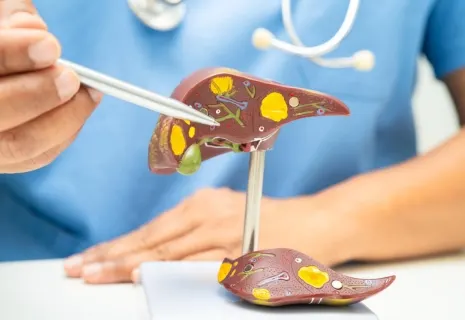
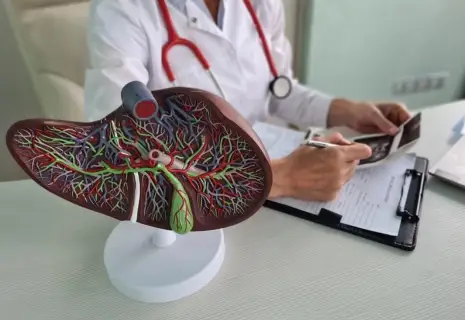
The gallbladder is a small pouch-shaped organ located beneath the liver.
Its primary function is to:
- Store bile
- Concentrate bile
- Release bile into the intestine after meals
Bile helps digest fats and oils present in food.
Although the gallbladder assists digestion, it is not essential for survival.
This is why patients can live a completely normal life after gallbladder removal.
What Are Gallbladder Stones?
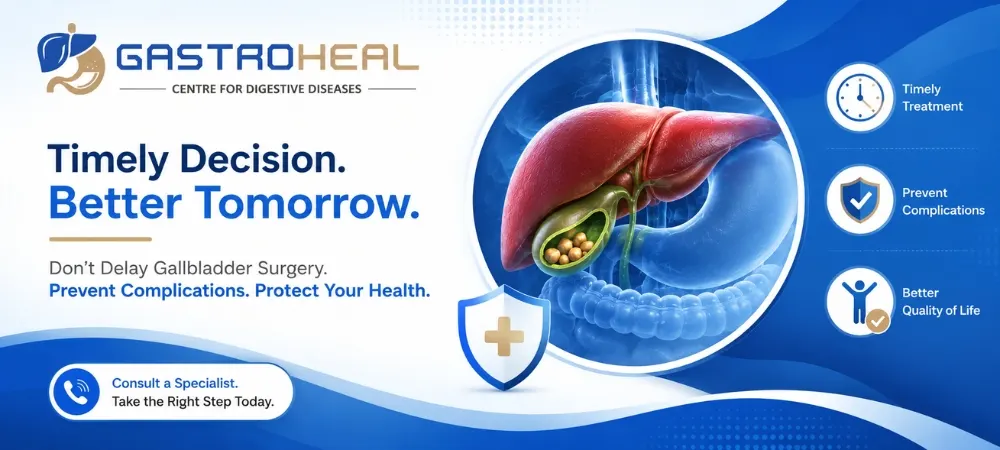
Gallstones are hardened deposits that form inside the gallbladder.
They may vary in size:
- Tiny as grains of sand
- Large as marbles
Some patients have a single stone, while others may have multiple stones.
Why Do Gallstones Form?
Several factors increase the risk of gallstones.
Common causes include:
- High cholesterol in bile
- Obesity
- Rapid weight loss
- Diabetes
- Family history
- Hormonal changes
- Increasing age
Gallstones are particularly common among adults over 40 years of age.
Do All Gallstones Need Surgery?
Not necessarily.
Some people have gallstones but never experience symptoms.
These are called:
Silent Gallstones
Such patients may only require observation.
However, surgery is usually recommended when symptoms develop.
Symptoms of Gallbladder Stones
The most common symptoms include:
- Right upper abdominal pain
- Pain after eating oily food
- Nausea
- Vomiting
- Bloating
- Indigestion
Many patients mistake these symptoms for acidity or gas.
Why Patients Delay Gallbladder Surgery
There are several common reasons.
Fear of Surgery
Many people are naturally afraid of undergoing surgery.
Temporary Relief From Medicines
Pain medications may temporarily improve symptoms.
However, medicines do not remove gallstones.
Busy Lifestyle
Patients often postpone treatment due to work, family responsibilities, or travel.
Lack of Symptoms Between Attacks
Some patients feel fine between painful episodes and assume the problem has resolved.
Unfortunately, gallstones usually remain present.
Can Gallstones Disappear Without Surgery?
This is one of the most common questions.
The answer is:
In most cases, gallstones do not disappear on their own.
While certain medications may dissolve a small number of stones, recurrence is common and results are often unpredictable.
Surgery remains the most effective and permanent treatment.
Is It Safe to Delay Gallbladder Surgery?
The answer depends on:
- Symptoms
- Stone size
- Number of attacks
- Presence of complications
For symptomatic gallstones, prolonged delay is generally not recommended.
The reason is simple:
Gallstones can cause serious complications without warning.
Gallbladder Stone Complications
Many patients assume gallstones only cause pain.
In reality, untreated gallstones may lead to several dangerous conditions.
1. Acute Cholecystitis (Gallbladder Infection)
This is one of the most common complications.
A stone blocks the gallbladder outlet, causing:
- Severe pain
- Fever
- Swelling
- Infection
Patients often require emergency admission.
Symptoms of Acute Cholecystitis
- Severe right-side abdominal pain
- Fever
- Vomiting
- Tenderness in upper abdomen
This condition usually requires urgent treatment.
2. Bile Duct Stones
Sometimes gallstones leave the gallbladder and enter the bile duct.
This can block bile flow.
Symptoms of Bile Duct Stones
- Jaundice
- Dark urine
- Pale stool
- Fever
These cases often require additional procedures before surgery.
3. Jaundice
Jaundice occurs when bile cannot flow normally.
Patients may develop:
- Yellow eyes
- Yellow skin
- Weakness
- Itching
This is a warning sign that should never be ignored.
4. Gallstone Pancreatitis
This is one of the most serious complications.
A stone can become stuck near the pancreatic duct.
This may trigger:
Acute Pancreatitis
Symptoms of Pancreatitis
- Severe abdominal pain
- Back pain
- Persistent vomiting
- Fever
Some patients require ICU care.
Why Pancreatitis Can Be Dangerous
Severe pancreatitis can lead to:
- Organ failure
- Infection
- Long hospital stay
- Life-threatening complications
Early gallbladder removal helps prevent this risk.
5. Gallbladder Empyema
This occurs when pus collects inside the gallbladder.
Symptoms include:
- High fever
- Severe pain
- Infection
Emergency surgery may become necessary.
6. Gallbladder Perforation
In severe cases, infection may cause the gallbladder wall to rupture.
This can result in:
- Internal infection
- Abscess formation
- Emergency surgery
How Delayed Surgery Becomes More Complicated
Many patients believe surgery will remain the same regardless of timing.
Unfortunately, complications often make surgery:
- More difficult
- Longer
- Riskier
Early surgery is usually safer than delayed emergency surgery.
Benefits of Early Gallbladder Surgery
Prevents Serious Complications
The biggest advantage.
Simpler Procedure
Before complications develop, surgery is often straightforward.
Faster Recovery
Healthy patients recover more quickly.
Reduced Hospital Stay
Most laparoscopic surgeries require short hospitalization.
Better Quality of Life
Patients no longer worry about recurring attacks.
What Is Laparoscopic Cholecystectomy?
The standard treatment for symptomatic gallstones is:
Laparoscopic Cholecystectomy
This is a minimally invasive procedure used to remove the gallbladder.
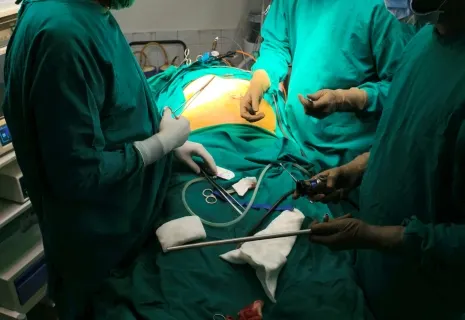
How Is Laparoscopic Surgery Performed?
The surgeon uses:
- Small incisions
- Specialized instruments
- High-definition camera
The gallbladder is removed safely through tiny cuts.
Benefits of Laparoscopic Cholecystectomy
- Less pain
- Faster recovery
- Smaller scars
- Lower infection risk
- Early return to work
Most patients resume normal activities within days.
Can You Live Normally Without a Gallbladder?
Yes.
This is one of the most common concerns.
After surgery:
- The liver continues producing bile
- Digestion continues normally
Most patients lead completely normal lives.
Warning Signs That Need Immediate Medical Attention
Seek urgent medical care if you experience:
- Severe abdominal pain
- Fever with abdominal pain
- Jaundice
- Persistent vomiting
- Sudden worsening symptoms
These may indicate gallbladder stone complications.
Why Early Consultation Matters
Many complications can be prevented with timely evaluation.
Early consultation allows:
- Proper diagnosis
- Treatment planning
- Prevention of emergencies
- Safer surgery
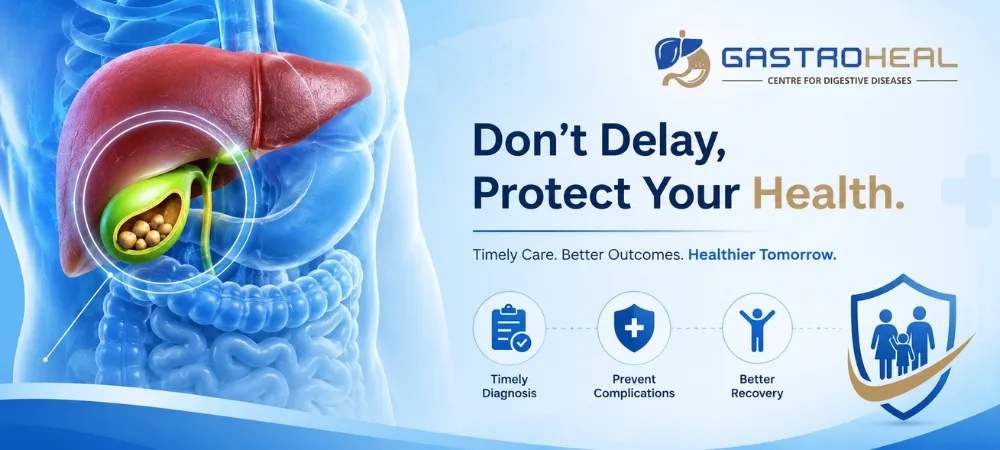
Advanced Gallbladder Surgery in Anand
For many years, patients often had to travel to larger cities for specialized digestive surgery.
Today, advanced gallbladder and digestive surgical care is available locally at:
Gastroheal – Centre for Digestive Diseases
located at Mahendra Shah Hospital, Anand.
Expertise of Dr. Prem Shah
Gastroheal is led by:
one of the first full-time formally trained Surgical Gastroenterologists serving Anand and nearby regions.
His expertise includes:
- Gallbladder surgery
- Liver surgery
- Pancreatic surgery
- Gastrointestinal cancer surgery
- Advanced laparoscopic procedures
This allows patients to access specialized digestive care closer to home.
Why Choose Specialized GI Surgical Care?
Gallbladder disease may appear simple, but complications can involve:
- Liver
- Bile ducts
- Pancreas
A Surgical Gastroenterologist has advanced training to manage these complex situations.
FAQs
What is Surgical Gastroenterology? ▼
What does a GI Surgeon do? ▼
When should I see a Surgical Gastroenterologist? ▼
Is a GI Surgeon different from a General Surgeon? ▼
What diseases are treated by Surgical Gastroenterologists? ▼
Is laparoscopic GI surgery available in Anand? ▼
Final Thoughts
Gallbladder stones should never be ignored simply because symptoms improve temporarily.
Delaying treatment may increase the risk of serious complications including infection, jaundice, pancreatitis, and emergency surgery.
In most symptomatic patients, early planned surgery is safer, simpler, and associated with better outcomes.
If you have been diagnosed with gallstones and are considering delaying treatment, discuss your options with an experienced Surgical Gastroenterologist.
Timely treatment can prevent major complications and provide long-term relief.
Consult a Gallbladder Specialist in Anand
If you are experiencing:
- Gallbladder pain
- Recurrent abdominal pain
- Jaundice
- Gallstone symptoms
- Digestive discomfort after meals
Consult:
Dr. Prem Shah
Advanced gallbladder and digestive care is now available near your hometown.