Table of Contents
- What Is Endoscopy?
- What Is an Endoscopy Test Used For?
- Why Is Endoscopy Done?
- What Happens During an Endoscopy Procedure?
- How to Prepare for an Endoscopy Test
- What Can Endoscopy Detect?
- When Should You Get an Endoscopy?
- Types of Endoscopy
- Benefits of Endoscopy
- Advanced Endoscopy Services in Anand
- FAQs
- Red Flag Symptoms
- Why Gastroheal Is a Trusted Gastro Surgery Center
- Final Thoughts
- Consultation in Anand
If you have been experiencing persistent acidity, stomach pain, vomiting, or difficulty swallowing, your doctor may recommend an endoscopy test.
Many patients feel anxious when they hear this.
Common questions include:
- What is endoscopy?
- Why is endoscopy done?
- Is endoscopy painful?
This guide will answer all your questions in a simple and clear way.
What Is Endoscopy?
An endoscopy is a medical test used to examine the inside of the digestive system.
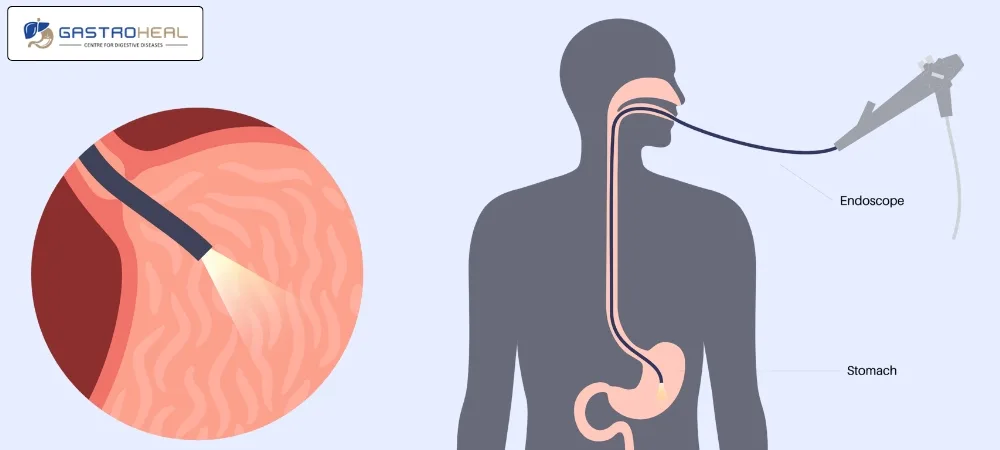
It is performed using a thin, flexible tube with a camera attached to it, called an endoscope.
The doctor inserts the endoscope through the mouth to examine:
- Food pipe (esophagus)
- Stomach
- Upper part of small intestine
What Is an Endoscopy Test Used For?
The endoscopy test helps doctors:
- Identify the cause of symptoms
- Detect ulcers
- Diagnose infections
- Detect tumors
- Identify bleeding
- Take biopsy samples
It is one of the most accurate tests for digestive diseases.
Why Is Endoscopy Done?
Doctors recommend endoscopy when patients experience persistent or unexplained digestive symptoms.
Common Reasons for Endoscopy
- Chronic acidity
- Burning stomach pain
- Difficulty swallowing
- Persistent vomiting
- Blood in vomit
- Black stool
- Unexplained weight loss
- Loss of appetite
Conditions Diagnosed by Endoscopy
Endoscopy helps diagnose:
- Stomach ulcers
- Gastritis
- GERD (acid reflux)
- Esophageal injury
- Infections (H. pylori)
- Tumors
- Early cancer
What Happens During an Endoscopy Procedure?
Understanding the process helps reduce fear.
Step-by-Step Endoscopy Procedure
1. Preparation
- Patient is asked to fast for 6–8 hours
- Medical history is reviewed
2. Sedation
- Mild sedation may be given
- Throat may be numbed with spray
3. Insertion of Endoscope
- A thin tube is gently inserted through the mouth
- It passes into the stomach
4. Examination
- Camera displays images on screen
- Doctor examines internal lining
5. Biopsy (if required)
- Small tissue sample may be taken
6. Completion
- Procedure usually takes 5–10 minutes
Is Endoscopy Painful?
This is the most common concern.
Endoscopy is not painful.
Patients may feel:
- Mild discomfort
- Slight gagging sensation
With sedation, most patients feel relaxed.
Many patients do not even remember the procedure.
Is Endoscopy Safe?
Yes, endoscopy is a very safe procedure.
It is routinely performed worldwide.
Possible Minor Side Effects
- Mild throat discomfort
- Temporary bloating
- Sleepiness due to sedation
Serious complications are extremely rare.
How to Prepare for an Endoscopy Test
Proper preparation ensures accurate results.
Before the Test
- Do not eat for 6–8 hours
- Inform doctor about medications
- Avoid certain medicines if advised
After the Test
- Rest for a few hours
- Avoid driving (if sedated)
- Resume diet gradually
What Can Endoscopy Detect?
Endoscopy is highly effective in detecting digestive diseases.
Common Findings
- Ulcers
- Inflammation
- Infection
- Tumors
- Bleeding source
Early Cancer Detection
One of the biggest advantages is early detection of cancer.
This allows timely treatment.
When Should You Get an Endoscopy?
Doctors recommend endoscopy if symptoms persist for more than 2–3 weeks.
Warning Signs That Need Endoscopy
- Persistent acidity
- Difficulty swallowing
- Weight loss
- Blood in vomit
- Black stool
- Chronic abdominal pain
Ignoring these symptoms may delay diagnosis.
Types of Endoscopy
1. Upper GI Endoscopy
Examines:
- Food pipe
- Stomach
- Duodenum
2. Colonoscopy
Examine the large intestine.
3. ERCP
Used for bile duct and pancreas.
Benefits of Endoscopy
Endoscopy offers several advantages:
- Accurate diagnosis
- Early detection of diseases
- Minimally invasive
- Quick procedure
- Safe and effective
Advanced Endoscopy Services in Anand
Patients in Anand and Kheda district now have access to advanced diagnostic services at Gastroheal – Centre for Digestive Diseases, Anand.
Expertise in Gastro Care
Gastroheal is led by Dr. Prem Shah, a trained surgical gastroenterologist specializing in:
- Advanced endoscopic procedures
- Gastrointestinal surgery
- Cancer diagnosis
- Digestive disease management
This ensures accurate diagnosis and proper treatment.
Why Early Diagnosis Matters
Early diagnosis helps:
- Prevent complications
- Detect cancer early
- Avoid major surgery
- Improve recovery
Endoscopy plays a crucial role in early detection.
FAQs
What is an endoscopy test? ▼
Why is endoscopy done? ▼
Is endoscopy painful? ▼
How long does endoscopy take? ▼
Is endoscopy safe? ▼
Can endoscopy detect cancer? ▼
Red Flag Symptoms
Seek immediate medical attention if you experience:
- Blood in vomit
- Black stool
- Severe abdominal pain
- Persistent vomiting
- Weight loss
Why Gastroheal Is a Trusted Gastro Surgery Center
Gastroheal offers:
- Advanced diagnostic services
- Expert gastro surgery
- Patient-focused care
- Modern medical technology
Patients in Anand and nearby areas can now access expert digestive care locally.
Final Thoughts
Endoscopy is a simple, safe, and highly effective diagnostic test.
It helps identify digestive diseases early and allows timely treatment.
If you experience persistent digestive symptoms, do not delay evaluation.
Consultation in Anand
If you are experiencing:
- Chronic acidity
- Stomach pain
- Difficulty swallowing
- Vomiting
Consult: