Table of Contents
- What Is Colon Cancer?
- What Is Rectal Cancer?
- Why Colon Cancer Is Increasing in India
- Early Colon Cancer Symptoms
- Rectal Cancer Signs You Should Not Ignore
- Difference Between Piles and Colon Cancer
- Why Early Detection Saves Lives
- How Colon Cancer Is Diagnosed
- What Is Colonoscopy?
- Can Colon Cancer Be Prevented?
- Treatment Options for Colon Cancer
- Role of Gastro Surgery in Colon Cancer
- Advanced Laparoscopic Colorectal Surgery
- Advanced Colon Cancer Care in Anand
- Expertise in Gastrointestinal Cancer Surgery
- Why Specialized GI Surgical Care Matters
- Importance of Timely Consultation
- FAQs
- Red Flag Symptoms
- Why Gastroheal Is a Trusted Gastro Surgery Center
- Final Thoughts
- Consultation in Anand
Digestive problems are extremely common today. Many people experience constipation, acidity, bloating, or occasional stomach discomfort and ignore them as routine issues.
But what if symptoms like blood in stool or change in bowel habits are actually early warning signs of something serious?
Colon cancer is one of the most important digestive diseases that needs early diagnosis. Unfortunately, many patients delay medical consultation because they assume symptoms are caused by piles or simple digestive issues.
The good news is:
Colon cancer is highly treatable when detected early.
In this complete guide, you will learn:
- Common colon cancer symptoms
- Early rectal cancer signs
- Causes and risk factors
- Why blood in stool should never be ignored
- Importance of early detection
- Diagnosis and treatment options
- When surgery is required
- Expert care available in Anand and Kheda district
What Is Colon Cancer?
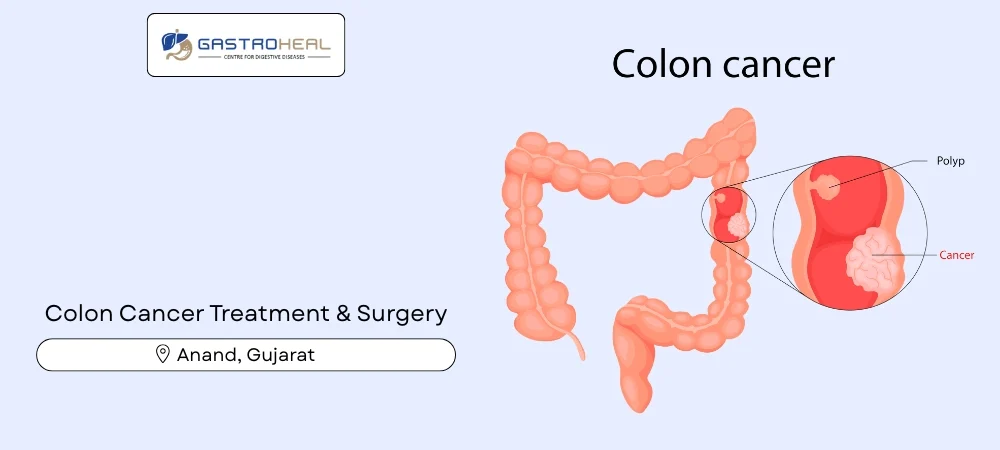
Colon cancer develops in the large intestine (colon), which is part of the digestive system.
The colon helps:
- Absorb water
- Process waste
- Form stool
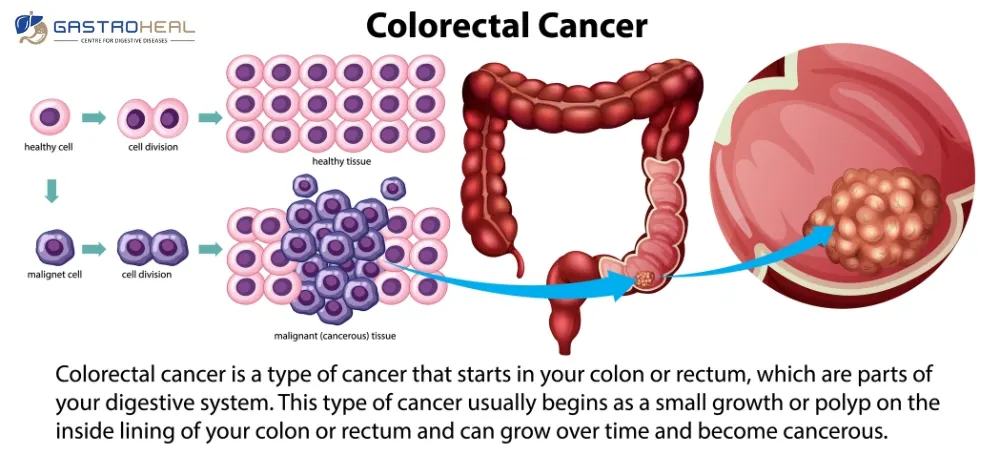
Cancer usually begins as small growths called polyps inside the colon lining.
Over time, some polyps can turn cancerous.
What Is Rectal Cancer?
The rectum is the last part of the large intestine before the anus.
Cancer developing in this area is called rectal cancer.
Colon and rectal cancers are often grouped together as:
Colorectal cancer
Why Colon Cancer Is Increasing in India
Colon cancer cases are rising due to:
- Sedentary lifestyle
- Low fiber diet
- Processed food consumption
- Obesity
- Smoking and alcohol
- Diabetes
- Family history
Awareness and early screening are extremely important.
Early Colon Cancer Symptoms
Early symptoms are often mild and easily ignored.
1. Blood in Stool
One of the most important warning signs.
Blood may appear:
- Bright red
- Dark red
- Mixed with stool
Many people assume this is due to piles.
However, persistent rectal bleeding requires evaluation.
2. Change in Bowel Habits
A major symptom.
This may include:
- Constipation
- Loose motions
- Alternating constipation and diarrhea
- Narrow stools
If bowel habits change for more than 2–3 weeks, consult a specialist.
3. Persistent Abdominal Pain
Ongoing pain, bloating, or discomfort should not be ignored.
4. Unexplained Weight Loss
Sudden weight loss without trying may indicate serious digestive disease.
5. Weakness and Fatigue
Chronic bleeding can cause anemia and weakness.
6. Feeling of Incomplete Emptying
Patients may feel stool is not passing completely.
Rectal Cancer Signs You Should Not Ignore
Rectal cancer may cause:
- Blood while passing stool
- Pain during bowel movement
- Frequent urge to pass stool
- Mucus in stool
- Narrow stools
These symptoms require medical evaluation.
Difference Between Piles and Colon Cancer
Many people confuse the symptoms.
| Feature | Piles | Colon Cancer |
|---|---|---|
| Blood | Bright red | Mixed with stool |
| Pain | Common | May be absent |
| Weight loss | Rare | Common |
| Bowel habit change | Rare | Common |
| Fatigue | Rare | Common |
Only proper testing can confirm the diagnosis.
Why Early Detection Saves Lives
Early diagnosis allows:
- Better treatment success
- Less complicated surgery
- Faster recovery
- Improved survival rates
Late-stage cancer is harder to treat.
Who Is at Higher Risk?
Risk increases in people with:
- Age above 45
- Family history of colon cancer
- Smoking
- Obesity
- Chronic inflammatory bowel disease
- Poor diet
However, younger people can also develop colon cancer.
How Colon Cancer Is Diagnosed
1. Medical History and Examination
Doctors evaluate:
- Symptoms
- Duration
- Family history
2. Blood Tests
Blood tests help identify:
- Anemia
- Infection
- Tumor markers
3. Colonoscopy
The most important diagnostic test.
A camera examines the colon and rectum.
It helps detect:
- Polyps
- Tumors
- Bleeding sources
Biopsy can also be taken.
4. Imaging Tests
Doctors may recommend:
- CT scan
- MRI
- PET scan
These help determine disease stage.
What Is Colonoscopy?
Colonoscopy is a safe procedure where a flexible camera is inserted through the rectum to examine the colon.
It helps:
- Detect early cancer
- Remove polyps
- Prevent cancer progression
Can Colon Cancer Be Prevented?
Yes, in many cases.
Prevention includes:
- Healthy diet
- Regular exercise
- Avoid smoking
- Fiber-rich food
- Early screening
Removing polyps early can prevent cancer.
Treatment Options for Colon Cancer
Treatment depends on stage and severity.
1. Surgery
Primary treatment for most cases.
2. Chemotherapy
Used to control or reduce cancer spread.
3. Radiation Therapy
More commonly used in rectal cancer.
4. Combination Treatment
Some patients require combined therapy.
Role of Gastro Surgery in Colon Cancer
Surgery aims to:
- Remove tumor
- Remove affected bowel segment
- Restore bowel continuity
Modern techniques improve recovery and outcomes.
Advanced Laparoscopic Colorectal Surgery
Laparoscopic surgery uses:
- Small incisions
- Camera guidance
- Faster recovery
Benefits include:
- Less pain
- Smaller scars
- Shorter hospital stay
- Faster return to routine
Advanced Colon Cancer Care in Anand
Patients in Anand and Kheda district previously had to travel to larger cities for advanced colorectal surgery.
Now specialized care is available at Gastroheal – Centre for Digestive Diseases
Expertise in Gastrointestinal Cancer Surgery
Gastroheal Centre is led by Dr. Prem Shah
with expertise in:
- Colon cancer surgery
- Rectal cancer surgery
- Gastrointestinal cancer treatment
- Advanced laparoscopic procedures
This ensures specialized digestive cancer care locally.
Why Specialized GI Surgical Care Matters
Colon cancer surgery requires:
- Specialized training
- Advanced infrastructure
- Cancer surgery expertise
- Multidisciplinary support
Choosing the right center improves outcomes.
Importance of Timely Consultation
Many patients delay evaluation due to:
- Embarrassment
- Fear
- Assuming piles
- Self-medication
This delay can worsen the disease stage.
FAQs
What are the early colon cancer symptoms? ▼
Is blood in stool always piles? ▼
What are rectal cancer signs? ▼
When should I worry about bowel habit changes? ▼
Can colon cancer be cured? ▼
Is colonoscopy painful? ▼
Red Flag Symptoms
Seek medical attention if you experience:
- Blood in stool
- Black stool
- Persistent constipation
- Sudden weight loss
- Severe abdominal pain
Why Gastroheal Is a Trusted Gastro Surgery Center
Gastroheal provides:
- Specialized gastrointestinal cancer surgery
- Advanced laparoscopic colorectal surgery
- Modern diagnostic facilities
- Patient-centered care
Patients in Anand and nearby regions can now access expert digestive cancer care locally.
Final Thoughts
Colon cancer often starts with mild symptoms.
Ignoring symptoms like blood in stool or change in bowel habits can delay diagnosis.
Early detection truly saves lives.
If you experience persistent digestive symptoms, consult a specialist without delay.
Consultation in Anand
If you are experiencing:
- Blood in stool
- Rectal bleeding
- Bowel habit changes
- Colon cancer symptoms
Consult: