Table of Contents
- What Is IBS?
- What Does Irritable Bowel Syndrome Mean?
- What Is the Medical Diagnostic Pattern for IBS?
- Understanding the Gut–Brain Axis
- Understanding the Gut Microbiome
- What Are the Common Symptoms of IBS?
- IBS Compared With Other Digestive Conditions
- What Foods Can Worsen IBS?
- What Foods May Be Better Tolerated?
- Can Exercise Improve IBS?
- What Is the Role of Mental Health Care?
- Red-Flag Symptoms That Are Not Typical of IBS
- When Should You Consult a Doctor?
- A Practical Daily Routine for IBS Patients
- Foods to Consider Limiting During an IBS Flare
- Common Myths About IBS
- Meet Dr. Prem Shah
- Why Gastroheal for Digestive Evaluation in Anand?
- Ten Key Takeaways
- FAQs
Gas after meals. A bloated stomach. Repeated constipation. Loose motions before an important meeting. A feeling that the bowel has not emptied completely. Abdominal discomfort that becomes worse during stress.
Many people live with these symptoms for months or years.
They may undergo blood tests, sonography, CT scans, endoscopy, or colonoscopy. When the reports do not show a serious structural disease, some patients feel confused.
They ask:
- If my reports are normal, why do I still feel unwell?
- Is this only acidity?
- Is the problem caused by stress?
- Do I have IBS?
- Can IBS become cancer?
- Will I need surgery?
- Can IBS be cured permanently?
Dr. Prem Shah frequently meets patients in OPD who arrive with a previous diagnosis of IBS or symptoms that resemble it. During counselling, he explains that IBS is not an imaginary illness and it is not simply “all in the mind.”
IBS is a genuine disorder involving communication between the brain and the digestive system, intestinal sensitivity, bowel movement patterns, food responses, sleep, stress, and possibly changes in the gut microbiome.
Two important concepts help patients understand IBS:
- The gut–brain axis
- The gut microbiome
This guide explains both concepts in simple English while answering the most common patient questions about IBS symptoms, diagnosis, food, stress, treatment, and warning signs.
It is designed for patients and families in Anand, Kheda, Nadiad, Karamsad, Petlad, Borsad, Vallabh Vidyanagar, Central Gujarat, and across Gujarat.
What Is IBS?
IBS, or irritable bowel syndrome, is a chronic disorder of gut–brain interaction that causes repeated abdominal pain along with constipation, diarrhoea, or a combination of both.
The intestine may look normal on routine tests, but its movement, sensitivity, and communication with the brain may not function normally.
IBS:
- Does not usually damage the intestine
- Does not directly turn into cancer
- Usually does not require surgery
- Can significantly affect daily life
- Can often be managed with personalised diet, lifestyle, medical treatment, and stress-related support
A proper medical assessment is still important because conditions such as inflammatory bowel disease, celiac disease, infection, thyroid disorders, or colorectal disease can sometimes produce similar symptoms.
Is IBS a Serious Disease?
IBS is not usually life-threatening and does not cause visible injury to the digestive tract. However, it can seriously affect quality of life, work, sleep, eating habits, travel, and emotional well-being.
The main concern is not that IBS itself becomes dangerous. The concern is incorrectly assuming that every bowel symptom is IBS without checking for warning signs.
What Does Irritable Bowel Syndrome Mean?
The word “irritable” does not mean the patient is irritable.
It means the bowel may be unusually sensitive or may react strongly to normal events such as:
- Eating
- Gas moving through the intestine
- Stool passing through the colon
- Hormonal changes
- Emotional stress
- Poor sleep
- Certain foods
The word “syndrome” means a group of symptoms that commonly occur together.
IBS usually includes:
- Recurrent abdominal pain
- Constipation, diarrhoea, or both
- Bloating
- Changes in stool frequency
- Changes in stool appearance
- Relief or worsening around bowel movements
What Are the Main Types of IBS?
IBS is commonly classified according to the dominant bowel pattern.
IBS-C: IBS With Constipation
The patient may experience:
- Hard or dry stools
- Straining
- Infrequent bowel movements
- A feeling of incomplete evacuation
- Bloating and abdominal discomfort
IBS-D: IBS With Diarrhoea
The patient may experience:
- Frequent loose stools
- Sudden urgency
- Loose motion after meals
- Loose motion during stress
- Fear of travelling without toilet access
IBS-M: Mixed IBS
The patient experiences both constipation and diarrhoea at different times.
Unclassified IBS
Symptoms fit IBS, but the stool pattern does not clearly match one subtype.
The subtype matters because a medicine that helps constipation may worsen diarrhoea, while a diarrhoea-focused medicine may worsen constipation.
What Is the Medical Diagnostic Pattern for IBS?
Doctors commonly consider IBS when recurrent abdominal pain occurs alongside a change in stool frequency, stool form, or a relationship with bowel movements.
Under the Rome IV framework, abdominal pain is generally present at least one day per week during the previous three months, with symptoms beginning at least six months before diagnosis.
Doctors also consider the complete clinical picture and look for warning signs.
How Common Is IBS?
IBS is one of the most frequently encountered disorders of gut–brain interaction.
The exact number varies between countries and depends on the diagnostic criteria used. Many people do not seek medical advice because they consider their symptoms embarrassing, normal, or related only to food.
IBS can affect:
- Men and women
- Young adults
- Middle-aged people
- Students
- Working professionals
- People with anxiety or poor sleep
- People without any diagnosed mental health condition
Women are diagnosed more often in many populations, but men also commonly experience IBS.
Why Does IBS Happen?
IBS does not have one single cause.
It may develop through a combination of factors, including:
- Altered gut–brain communication
- Increased sensitivity inside the intestine
- Abnormal bowel movement speed
- Changes after a stomach or intestinal infection
- Food-related sensitivity
- Stress and anxiety
- Poor sleep
- Changes in the gut microbiome
- Family or genetic susceptibility
- Pelvic floor dysfunction in selected patients
Different patients may have different dominant triggers.
That is why IBS treatment must be personalised rather than copied from another person.
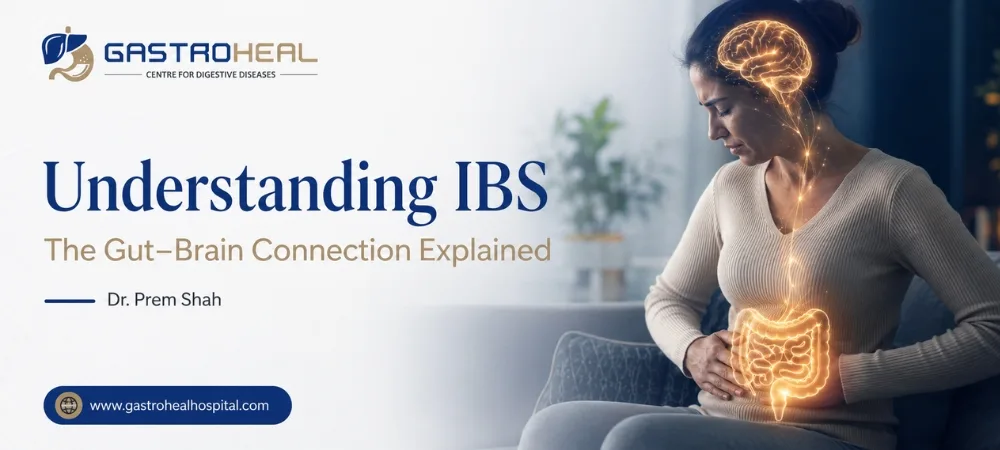
Understanding the Gut–Brain Axis
What Is the Gut–Brain Axis?
The gut–brain axis is the two-way communication network between the brain and the digestive system.
The brain sends signals to the gut.
The gut also sends signals back to the brain.
This communication uses:
- Nerves
- Hormones
- Immune signals
- Chemical messengers
- Microbial metabolites
- The autonomic nervous system
The gut has its own extensive nerve network, called the enteric nervous system. It helps control intestinal movement, secretion, blood flow, and digestive activity.
This is why the gut is sometimes informally called the “second brain.” It does not think like the brain, but it contains a large and complex network of nerve cells.
Can Stress Affect Digestion?
Yes. Stress can alter gut movement, sensitivity, secretion, and pain perception.
For one person, stress may slow bowel movement and cause constipation. For another, it may speed movement and cause loose motions or urgency.
Stress does not mean that IBS is imaginary. It means the nervous and digestive systems are biologically connected.
A Simple Real-Life Example of the Gut–Brain Axis
Imagine that you have an important interview the next morning.
At night, you begin thinking:
- What if I make a mistake?
- What if I arrive late?
- What if I fail?
Your sleep becomes disturbed.
The next morning, you may notice:
- Abdominal tightness
- Urgent loose motion
- Gas
- Nausea
- Loss of appetite
Nothing dangerous may have happened inside the intestine. However, the stress response has influenced gut movement and sensitivity.
This is a simple example of the gut–brain axis.
Why Does Anxiety Cause Bloating?
Anxiety may contribute to bloating through several pathways:
- Increased awareness of normal gut sensations
- Altered breathing and swallowing of air
- Changes in intestinal movement
- Tension in abdominal muscles
- Changes in eating speed
- Irregular meals
- Increased sensitivity to gas or stool
The amount of gas may not always be unusually high. The intestine may simply feel normal stretching more intensely.
Why Do I Get Loose During Stress?
Stress activates nervous-system and hormonal responses that can speed intestinal movement in some people.
When food and fluid pass through the colon too quickly, the bowel has less time to absorb water. This can produce loose stools, urgency, or repeated visits to the toilet.
Why Does Stress Cause Constipation in Some People?
Stress does not affect everyone in the same way.
In some patients, stress may:
- Slow colon movement
- Increase pelvic floor tension
- Reduce physical activity
- Disturb meal timing
- Reduce water intake
- Increase reliance on processed snacks
These factors may lead to hard stools and incomplete evacuation.
How Does Poor Sleep Affect IBS?
Poor sleep can affect:
- Stress hormones
- Pain sensitivity
- Appetite regulation
- Food choices
- Bowel movement patterns
- Emotional resilience
A person who sleeps poorly may become more sensitive to abdominal discomfort the following day.
IBS symptoms can also disturb sleep, creating a cycle:
Poor sleep → increased sensitivity and stress → worse bowel symptoms → further sleep disturbance.
Can Improving Sleep Reduce IBS Symptoms?
Improving sleep may reduce symptom intensity in some patients, especially when irregular sleep, late meals, fatigue, and stress are major triggers.
Sleep improvement is not a replacement for medical assessment. It is one part of a broader IBS management plan.
Is IBS “All in the Mind”?
No.
IBS is a real biological disorder involving gut sensitivity, bowel movement, immune signalling, food responses, and brain–gut communication.
Emotional factors can influence symptoms, but that does not make the symptoms false.
A similar example is blood pressure increasing during stress. The connection with emotion does not make the physical effect imaginary.
Understanding the Gut Microbiome
What Is the Gut Microbiome?
The gut microbiome is the community of microorganisms living inside the digestive tract.
It includes:
- Bacteria
- Viruses
- Fungi
- Other microorganisms
- Many microbes participate in
- Breaking down food components
- Producing certain metabolites
- Supporting the intestinal barrier
- Communicating with the immune system
- Interacting with the gut–brain axis
The microbiome differs from person to person.
“Good Bacteria” and “Bad Bacteria”: Is It That Simple?
The popular idea of good and bad bacteria is useful for basic understanding, but scientifically the microbiome is more complex.
A microbe may be harmless in one environment but problematic when:
- It grows excessively
- Microbial diversity falls
- The intestinal environment changes
- The immune system reacts differently
A healthier microbiome is generally associated with balance, diversity, and stable function rather than one perfect list of bacteria.
Does IBS Involve the Gut Microbiome?
Research suggests that changes in gut microbial composition and function may contribute to IBS in some patients.
However, there is no single microbiome pattern that diagnoses IBS, and routine commercial microbiome testing is not currently a standard way to diagnose the condition.
How Does Fibre Support Gut Health?
Certain fibres are fermented by intestinal bacteria.
This fermentation can produce short-chain fatty acids and other compounds that may support the intestinal environment.
Fibre may also:
- Improve stool consistency
- Add softness to hard stools
- Support bowel regularity
- Feed selected microbial communities
However, increasing fibre too quickly may worsen gas and bloating.
Soluble fibre, such as psyllium, is generally better supported for IBS than coarse insoluble fibre.
Is More Fibre Always Better for IBS?
No.
Some patients improve with soluble fibre, while a sudden increase in bran or rough insoluble fibre may worsen pain, gas, and bloating.
Fibre should be introduced gradually with adequate water and adjusted according to the patient’s IBS subtype.
How Can Ultra-Processed Food Affect Digestion?
Ultra-processed foods often contain combinations of:
- Refined flour
- Added sugar
- Excess salt
- Unhealthy fats
- Emulsifiers
- Artificial sweeteners
- Low fibre
- Highly concentrated flavouring
Frequent consumption may displace more nutritious foods and may worsen symptoms in sensitive patients.
Not every packaged food causes IBS, but a diet dominated by fried and ultra-processed products may make symptom control more difficult.
Foods That May Disturb Digestion in Some Patients
Potential triggers include:
- Deep-fried food
- Large fatty meals
- Packaged snacks
- Refined-flour products
- Sugary drinks
- Excess tea or coffee
- Artificial sweeteners
- Large amounts of onion or garlic
- Certain beans and pulses
- Milk in lactose-intolerant people
- Excess alcohol
- Very spicy meals
Triggers differ widely. A food diary is often more useful than banning every item.
Does Junk Food Cause IBS?
Junk food is not considered the single cause of IBS.
However, frequent intake of fried, high-fat, low-fibre, or ultra-processed food may trigger symptoms, alter bowel movement, and make overall digestive health worse in some people.
What Are the Common Symptoms of IBS?
The most typical IBS symptoms include:
- Recurrent abdominal pain
- Bloating
- Constipation
- Diarrhoea
- Alternating constipation and diarrhoea
- Changes in stool appearance
- Urgency
- Incomplete bowel clearance
- Gas after eating
- Relief after passing stool in some patients
- Symptoms that worsen during stress
Other associated complaints may include:
- Fatigue
- Poor sleep
- Nausea
- Back discomfort
- Increased urinary frequency
- Anxiety about toilet access
- Reduced confidence while travelling
Is Bloating a Symptom of IBS?
Yes. Bloating is common in IBS, although it is not required for diagnosis.
It may result from altered movement, food fermentation, constipation, increased gut sensitivity, or changes in how the brain interprets intestinal stretching.
Why Do I Feel That My Bowel Is Not Completely Empty?
Incomplete evacuation may occur because of:
- Constipation
- Rectal sensitivity
- Pelvic floor coordination problems
- Frequent small bowel movements
- Anxiety about bowel clearance
- IBS-related changes in sensation
Patients who strain excessively or spend a long time on the toilet should discuss this with a doctor.
Can IBS Cause Mucus in Stool?
Some patients with IBS notice a small amount of clear or whitish mucus.
However, mucus with blood, fever, weight loss, night symptoms, or severe diarrhoea requires evaluation for other conditions.
IBS Compared With Other Digestive Conditions
IBS vs Acidity
| Feature | IBS | Acidity or Reflux |
|---|---|---|
| Main area | Intestine and bowel pattern | Stomach and food pipe |
| Common symptoms | Pain, bloating, constipation, diarrhoea | Burning, sour taste, reflux |
| Relation to stool | Common | Usually limited |
| Difficulty swallowing | Not typical | May occur in severe reflux |
| Surgery | Usually not required | Rarely required in selected complicated cases |
A patient can have both IBS and acid reflux.
IBS vs Gastritis
Gastritis means inflammation of the stomach lining.
IBS affects bowel function and gut–brain interaction without visible structural damage.
Gastritis may cause:
- Upper abdominal burning
- Nausea
- Early fullness
- Pain after eating
- IBS more commonly causes:
- (Below Bullet Points)
- Lower or variable abdominal pain
- Stool changes
- Constipation or diarrhoea
- Bloating
IBS vs Functional Dyspepsia
Functional dyspepsia mainly affects the upper digestive system.
Symptoms may include:
- Early fullness
- Upper abdominal discomfort
- Bloating after meals
- Nausea
- Feeling excessively full
IBS mainly involves abdominal pain associated with bowel habit changes.
Some patients have both disorders.
Both are now understood as disorders of gut–brain interaction.
IBS vs IBD
IBD means inflammatory bowel disease and includes Crohn’s disease and ulcerative colitis.
| Feature | IBS | IBD |
|---|---|---|
| Structural inflammation | No visible intestinal damage | Inflammation and tissue injury |
| Blood in stool | Not typical | Can occur |
| Fever | Not typical | May occur |
| Weight loss | Not expected | May occur |
| Anaemia | Not caused by IBS | May occur |
| Cancer risk | IBS does not increase it | Some long-term IBD patients have increased risk |
| Treatment | Diet, lifestyle, medicines, gut–brain therapies | Anti-inflammatory, immune, biologic, or surgical treatment |
IBS vs Colon Cancer
IBS does not become colon cancer.
However, some symptoms can overlap, particularly:
- Change in bowel habits
- Abdominal discomfort
- Bloating
- Colon cancer warning signs may include:
- (Below Bullet Points)
- Blood in stool
- Unexplained weight loss
- Anaemia
- Progressive symptoms
- A new bowel change at an older age
- Family history
- Obstruction
A patient should not assume new or concerning symptoms are IBS without evaluation.
Does IBS Increase Colon Cancer Risk?
IBS itself is not known to cause colon cancer or increase colon cancer risk.
Patients should still follow age-appropriate screening recommendations and seek evaluation for red-flag symptoms.
What Foods Can Worsen IBS?
Common trigger categories include:
Large Fatty Meals
These may worsen:
- Urgency
- Cramping
- Bloating
- Loose stools
Caffeine
Tea, coffee, cola, and energy drinks may stimulate bowel movement in sensitive patients.
Alcohol
Alcohol may affect gut movement, sleep, hydration, and food choices.
Lactose
Milk may cause gas or diarrhoea in people with lactose intolerance.
Fermentable Carbohydrates
Some patients react to fermentable carbohydrates found in foods such as:
- Onion
- Garlic
- Wheat products
- Certain fruits
- Milk
- Legumes
- Artificial sweeteners
These are often discussed under the term FODMAPs.
A low-FODMAP diet should ideally be a limited, structured trial followed by gradual reintroduction, preferably with a trained dietitian. It should not become a permanent unnecessarily restrictive diet.
Should Every IBS Patient Follow a Low-FODMAP Diet?
No.
A low-FODMAP trial may help selected patients, but it is not required for everyone. It should be time-limited, followed by structured food reintroduction, and adapted to nutritional needs.
What Foods May Be Better Tolerated?
There is no universal IBS diet.
Depending on individual tolerance, some people may do better with:
- Oats
- Rice
- Simple home-cooked meals
- Cooked vegetables
- Bananas
- Papaya
- Curd, when tolerated
- Adequate protein
- Soluble fibre
- Smaller portions
- Regular meal timing
The goal is not to eat only bland food forever.
The goal is to identify personal triggers while maintaining nutritional variety.
Can Stress Alone Cause IBS?
Stress alone does not fully explain every case of IBS.
IBS is multifactorial.
Stress may:
- Trigger symptoms
- Increase pain sensitivity
- Change bowel movement
- Affect sleep
- Influence eating patterns
- Worsen an existing gut–brain disorder
Some people develop IBS after a gastrointestinal infection, while others may have dietary, microbial, sensory, or psychological contributors.
Does Anxiety Cause IBS?
Anxiety does not mean that the patient has invented IBS.
Anxiety can influence the gut–brain axis and may worsen abdominal pain, urgency, constipation, or bloating. IBS can also increase anxiety, creating a two-way cycle.
Can Exercise Improve IBS?
Regular movement may help by:
- Supporting bowel regularity
- Reducing stress
- Improving sleep
- Supporting weight management
- Reducing constipation in some patients
- Suitable options include:
- (Below Bullet Points)
- Walking
- Yoga
- Cycling
- Light strength exercise
- Swimming
- Stretching
A practical target may be around 30 minutes of moderate activity on most days, adjusted for fitness and medical conditions.
Is Yoga Helpful for IBS?
Yoga may help some patients by supporting physical activity, relaxation, breathing control, sleep, and stress management.
It should be considered supportive care, not a guaranteed cure.
What Is the Role of Probiotics?
Probiotics are live microorganisms found in certain foods or supplements.
Some patients report improvement. Others do not.
Research is inconsistent because probiotic products contain different:
- Species
- Strains
- Doses
- Combinations
Current evidence does not support promising that every probiotic will improve global IBS symptoms.
Patients should avoid repeatedly purchasing random supplements without a clear treatment plan.
Should IBS Patients Take Probiotics?
Probiotics are not universally recommended for every IBS patient because evidence varies by strain and product.
A clinician may consider a monitored trial in selected cases, but continued use should depend on clear benefit.
What Is the Role of Hydration?
Water helps support:
- Stool softness
- Fibre tolerance
- General hydration
- Recovery from diarrhoea
However, excessive water alone will not cure IBS.
Patients with repeated loose stools may also need appropriate electrolyte replacement.
Sugary beverages and excessive caffeine may worsen symptoms in some people.
What Is the Role of Mental Health Care?
Mental health support is not given because IBS is imaginary.
It may be useful because the brain and gut are connected.
Evidence-based options may include:
- Cognitive behavioural therapy
- Gut-directed hypnotherapy
- Relaxation training
- Stress-management counselling
- Treatment for anxiety or depression when present
These therapies may reduce symptom intensity and improve coping and quality of life.
Why Would a Doctor Recommend Therapy for IBS?
Gut-directed psychological therapy can help modify stress responses, pain interpretation, symptom-related fear, and gut–brain signalling.
It is a medical treatment option for a disorder of gut–brain interaction, not a dismissal of physical symptoms.
Red-Flag Symptoms That Are Not Typical of IBS
Seek medical evaluation promptly if you have:
- Blood in stool
- Black or tarry stool
- Unexplained weight loss
- Persistent fever
- Repeated vomiting
- Anaemia
- A new bowel change later in life
- Progressive symptoms
- Severe pain waking you repeatedly from sleep
- A family history of colorectal cancer, celiac disease, or inflammatory bowel disease
- An abdominal lump
- Jaundice
- Persistent inability to pass stool or gas
These symptoms do not automatically mean cancer, but they should not be labelled as IBS without further evaluation.
When Is IBS an Emergency?
IBS itself rarely causes a medical emergency.
Urgent care is needed when symptoms include severe or worsening abdominal pain, persistent vomiting, bleeding, fainting, high fever, jaundice, a rigid or rapidly swollen abdomen, or inability to pass stool and gas.
When Should You Consult a Doctor?
Arrange medical evaluation when:
- Symptoms continue for several weeks
- Pain repeatedly affects daily life
- Constipation or diarrhoea keeps returning
- You depend on frequent self-medication
- Food restriction is becoming excessive
- Sleep or work is affected
- You are unsure whether symptoms are IBS
- You have any red-flag feature
People in Anand, Kheda, Nadiad, Karamsad, Petlad, Borsad, Vallabh Vidyanagar, and Central Gujarat can seek a structured digestive evaluation rather than repeatedly treating symptoms without diagnosis.
How Is IBS Diagnosed?
There is no single blood test, scan, endoscopy, or colonoscopy that proves IBS.
Diagnosis usually involves:
- A detailed symptom history
- Review of bowel pattern
- Medical and family history
- Physical examination
- Assessment for red flags
- Limited tests when appropriate
Depending on symptoms, tests may include:
- Complete blood count
- Inflammatory markers
- Celiac disease testing
- Stool testing
- Thyroid testing
- Endoscopy
- Colonoscopy
- Imaging
Not every patient needs every test.
A positive diagnostic approach means identifying a typical IBS pattern while using appropriate, limited investigations to check for likely alternatives.
Is IBS Diagnosed Only After Every Test Is Normal?
No.
Modern guidelines support a positive diagnosis based on a typical symptom pattern, medical history, examination, and selected tests.
Doctors do not need to perform every available investigation in every patient.
Can IBS Be Cured?
IBS is commonly a long-term condition with periods of improvement and flare-ups.
There is no single permanent cure that works for everyone.
However, many patients achieve substantial control through:
- Understanding triggers
- Regular sleep
- Appropriate fibre
- Dietary adjustment
- Exercise
- Stress management
- Medicines matched to IBS subtype
- Psychological support when needed
- Regular review
The aim is long-term symptom control and improved quality of life, not unrealistic promises.
Can IBS Go Away Completely?
Some patients experience long symptom-free periods, while others have recurring flare-ups.
A personalised management plan can significantly reduce symptoms, but no responsible clinician should guarantee a permanent cure.
How Is IBS Treated?
Treatment depends on the dominant symptoms and individual triggers.
Diet and Meal Pattern
Possible strategies include:
- Regular meal times
- Smaller meals
- Avoiding identified triggers
- A supervised low-FODMAP trial when suitable
- Gradual soluble-fibre intake
- Avoiding unnecessary long-term restriction
Lifestyle
- Regular exercise
- Adequate sleep
- Hydration
- Reduced tobacco and alcohol exposure
- Stress-management habits
Medicines
A doctor may prescribe medicines for:
- Constipation
- Diarrhoea
- Cramping
- Pain sensitivity
- Bloating
- Associated anxiety
Medication choice depends on IBS subtype and medical history.
Gut-Directed Therapy
Selected patients may benefit from:
- Cognitive behavioural therapy
- Hypnotherapy
- Relaxation training
- Psychological counselling
Does IBS Require Surgery?
IBS itself usually does not require surgery because it does not create a structural blockage, tumour, perforation, or visible intestinal injury.
Surgery is considered only if a different surgical disease is found.
A Practical Daily Routine for IBS Patients
Morning
- Wake at a regular time
- Drink water according to thirst
- Avoid immediately rushing into a stressful schedule
- Eat a simple breakfast
- Allow unhurried toilet time without prolonged straining
During the Day
- Eat meals at regular intervals
- Avoid very large portions
- Walk after meals when possible
- Limit excessive tea, coffee, and packaged snacks
- Record symptoms and possible triggers
Evening
- Choose a lighter dinner
- Avoid lying down immediately after eating
- Reduce work-related stimulation before bed
- Practise calm breathing or gentle stretching
Night
- Maintain a consistent sleep time
- Avoid excessive screen exposure
- Aim for adequate restorative sleep
Consistency matters more than one perfect day.
Foods to Consider Limiting During an IBS Flare
Depending on personal triggers:
- Deep-fried snacks
- Very fatty meals
- Excess chilli
- Large portions of onion and garlic
- Excess milk when lactose intolerant
- Carbonated drinks
- Artificial sweeteners containing polyols
- Excess caffeine
- Alcohol
- Very large meals
- Unplanned combinations of supplements
Do not remove multiple food groups permanently without professional advice.
Foods That May Support a Balanced IBS Diet
Based on tolerance:
- Oats
- Psyllium or other soluble fibre
- Rice
- Well-cooked vegetables
- Suitable fruits
- Curd or fermented foods if tolerated
- Lentils in tolerated quantities
- Adequate protein
- Nuts and seeds in suitable portions
- Home-cooked meals
- Sufficient water
A dietitian can help maintain nutrition while identifying triggers.
Common Myths About IBS
Myth 1: IBS Is Only Gas
IBS includes recurrent pain and altered bowel habits, not only gas.
Myth 2: IBS Is Cancer
IBS is not cancer and does not directly become cancer.
Myth 3: Normal Tests Mean Nothing Is Wrong
IBS affects function, sensitivity, and gut–brain communication, which may not appear as structural damage on scans.
Myth 4: Stress Is the Only Cause
Stress can worsen symptoms, but IBS is multifactorial.
Myth 5: Everyone Should Stop Gluten
Only selected patients benefit from gluten restriction, and celiac disease should be considered appropriately.
Myth 6: Probiotics Cure IBS
Evidence varies by product, strain, and patient.
Myth 7: More Fibre Always Helps
Soluble fibre may help; coarse or rapidly increased fibre may worsen bloating.
Myth 8: IBS Requires Surgery
IBS usually does not require surgery.
Myth 9: Patients Should Avoid All Trigger Foods Forever
Over-restriction can cause nutritional and social problems. The goal is personalised tolerance.
Myth 10: IBS Is Imaginary
IBS is a recognised disorder of gut–brain interaction with real symptoms.
Meet Dr. Prem Shah
Dr. Prem Shah is a formally trained Surgical Gastroenterologist serving Anand and surrounding regions.
He completed:
- MBBS
- MS in General Surgery
- DrNB in Surgical Gastroenterology
He received advanced Surgical Gastroenterology training at Seth G.S. Medical College and KEM Hospital, Mumbai.
His clinical interests include:
- Liver and biliary surgery
- Pancreatic surgery
- Gastrointestinal cancer surgery
- Advanced laparoscopic surgery
- Colorectal surgery
- Complex digestive disease evaluation
During OPD consultations, Dr. Prem Shah frequently counsels patients who have chronic gas, bloating, constipation, diarrhoea, or a previous IBS diagnosis.
The purpose of assessment is not to advise surgery for IBS.
It is to:
- Understand the symptom pattern
- Identify warning signs
- Rule out important structural disease when needed
- Avoid unnecessary fear
- Guide patients toward appropriate medical, dietary, and lifestyle care
- Explain when specialist referral is required
Why Gastroheal for Digestive Evaluation in Anand?
Gastroheal – Centre for Digestive Diseases operates at Mahendra Shah Hospital, Anand.
The centre focuses on digestive conditions ranging from common symptoms to complex surgical diseases.
Its approach includes:
- Patient-focused consultation
- Clear explanation of symptoms
- Appropriate investigation
- Avoidance of unnecessary surgery
- Identification of red flags
- Structured referral when medical Gastroenterology, dietetic, psychological, oncological, or other care is required
- Advanced surgical management when a genuine surgical condition is found
Patients from Anand, Kheda, Nadiad, Karamsad, Petlad, Borsad, Vallabh Vidyanagar, and Central Gujarat can seek evaluation close to home.
Quick Summary
- IBS is a disorder of gut–brain interaction.
- It causes abdominal pain with constipation, diarrhoea, or both.
- IBS does not usually damage the intestine.
- IBS is not cancer and does not directly become cancer.
- Stress may worsen symptoms through the gut–brain axis.
- Sleep and anxiety can influence bowel movement and sensitivity.
- The gut microbiome may play a role, but it is not the only cause.
- Soluble fibre may help selected patients.
- A low-FODMAP diet should be structured and time-limited.
- Probiotics do not work reliably for everyone.
- IBS usually does not require surgery.
- Blood in stool, weight loss, anaemia, fever, and persistent vomiting require evaluation.
- Treatment must be personalised.
Ten Key Takeaways
- IBS is real, even when routine reports are normal.
- The brain and gut communicate in both directions.
- Stress can worsen IBS but is not its only cause.
- The microbiome is complex; it is not simply a battle between good and bad bacteria.
- Dietary triggers differ from one person to another.
- Soluble fibre is generally better supported than coarse insoluble fibre.
- Random food restriction and supplement use may create new problems.
- IBS does not directly cause cancer.
- Red-flag symptoms must not be labelled as IBS without evaluation.
- Long-term improvement usually requires a combination of medical guidance, diet, movement, sleep, and stress management.
Do you experience repeated bloating, gas after eating, constipation, loose motions, abdominal discomfort, or incomplete bowel clearance?
Do the symptoms become worse during stress, anxiety, travel, or poor sleep?
Avoid repeatedly self-medicating or following restrictive diets without a proper assessment.
For evaluation of persistent digestive symptoms, consult:
Dr. Prem Shah
Surgical Gastroenterologist
Gastroheal – Centre for Digestive Diseases
Mahendra Shah Hospital, Anand, Gujarat
Timely assessment can help distinguish IBS from conditions that require further investigation or specialised treatment.
FAQs
What are the most common IBS symptoms? ▼
Is IBS a lifelong condition? ▼
Can IBS become colon cancer? ▼
Can stress cause stomach problems? ▼
Why does anxiety cause bloating? ▼
Why do I feel gas every day? ▼
How is IBS diagnosed? ▼
Does IBS show on a CT scan? ▼
Does IBS show on colonoscopy? ▼
Is IBS caused by bad bacteria? ▼
Are probiotics useful for IBS? ▼
Which fibre is best for IBS? ▼
Can a high-fibre diet worsen IBS? ▼
Can IBS cause back pain? ▼
Can IBS cause weight loss? ▼
Is blood in stool common in IBS? ▼
Can IBS cause fever? ▼
Can poor sleep worsen IBS? ▼
Can exercise improve constipation in IBS? ▼
Is curd good for IBS? ▼
Medical Disclaimer
This article is intended for general education and patient awareness. It does not replace personal medical consultation, diagnosis, or treatment. IBS symptoms can resemble other digestive conditions. Seek qualified medical advice for persistent symptoms, and obtain urgent care for bleeding, severe pain, repeated vomiting, jaundice, fever, fainting, unexplained weight loss, or rapidly worsening symptoms.