Table of Contents
- What is the difference between acute and chronic pancreatitis?
- Acute vs chronic pancreatitis at a glance
- What causes chronic pancreatitis?
- Can repeated acute pancreatitis become chronic pancreatitis?
- Acute and chronic pancreatitis symptoms comparison
- How does pancreatic pain feel?
- How is acute pancreatitis treated?
- What endoscopic treatments are used?
- Acute vs chronic pancreatitis treatment comparison
- How can pancreatitis recurrence be prevented?
- Common myths about pancreatitis
- When should you consult a Surgical Gastroenterologist?
- Meet Dr. Prem Shah
- Why consult Gastroheal for pancreatic disease in Anand?
- FAQs
- Consult Dr. Prem Shah at Gastroheal
Severe pain in the upper abdomen that spreads to the back can be frightening. For some people, it begins suddenly and becomes intense within a few hours. For others, the pain keeps returning over months or years, especially after meals.
Both patterns may be linked to pancreatitis, but they do not mean the same thing.
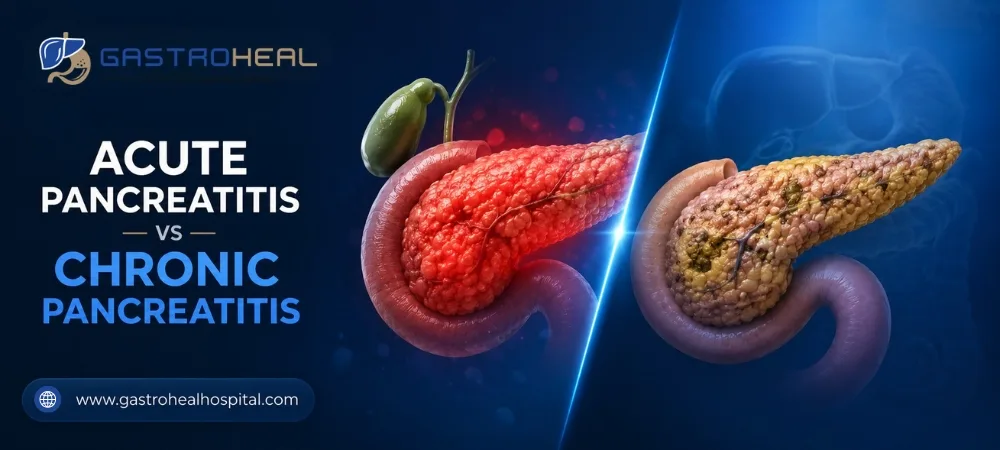
Acute pancreatitis is a sudden episode of pancreatic inflammation. It may improve completely with timely treatment, although severe cases can become life-threatening.
Chronic pancreatitis is long-term, progressive damage that causes permanent scarring and may gradually reduce the pancreas’s ability to digest food and control blood sugar.
A simple way to understand the difference is:
Acute pancreatitis is like a sudden fire in the pancreas. Chronic pancreatitis is like repeated or ongoing damage that slowly leaves permanent scars.
Patients from Anand, Kheda, Nadiad, Karamsad, Petlad, Borsad, Vallabh Vidyanagar, and other parts of Central Gujarat may experience pancreatic symptoms for many different reasons. Some need hospital-based treatment, some require gallbladder surgery after recovery, and others need long-term pancreatic care.
This guide explains the acute and chronic pancreatitis difference, including causes, symptoms, tests, complications, treatment options, diet, surgery, prevention, and warning signs.
What is the difference between acute and chronic pancreatitis?
Acute pancreatitis begins suddenly and is usually a short-term illness. Chronic pancreatitis develops over time and causes permanent structural damage to the pancreas.
| Feature | Acute pancreatitis | Chronic pancreatitis |
|---|---|---|
| Onset | Sudden | Gradual or recurrent |
| Duration | Usually days to weeks | Months to years |
| Pancreatic damage | Often reversible | Permanent scarring |
| Common causes | Gallstones, alcohol, high triglycerides | Long-term alcohol exposure, recurrent attacks, genetic or duct-related disease |
| Typical pain | Sudden, severe upper-abdominal pain | Recurrent or persistent pain, often worse after eating |
| Digestion problems | Usually temporary | Common in advanced disease |
| Diabetes risk | Possible after severe attacks | More common as damage progresses |
| Surgery | Needed only in selected cases | May be required for pain, duct obstruction, stones, complications, or suspected cancer |
| Long-term follow-up | Depends on cause and severity | Usually required |
Acute pancreatitis can settle completely, but recurrent episodes can contribute to chronic pancreatic injury in some patients. Chronic pancreatitis does not usually return to a normal pancreas because scar tissue is permanent.
What is pancreatitis?
Pancreatitis means inflammation of the pancreas.
The pancreas normally produces digestive enzymes that become active after entering the small intestine. It also produces hormones such as insulin, which help regulate blood sugar.
In pancreatitis, pancreatic tissue becomes inflamed and damaged. Either acute or chronic pancreatitis can lead to complications, so persistent or severe symptoms should not be ignored.
What is the pancreas?
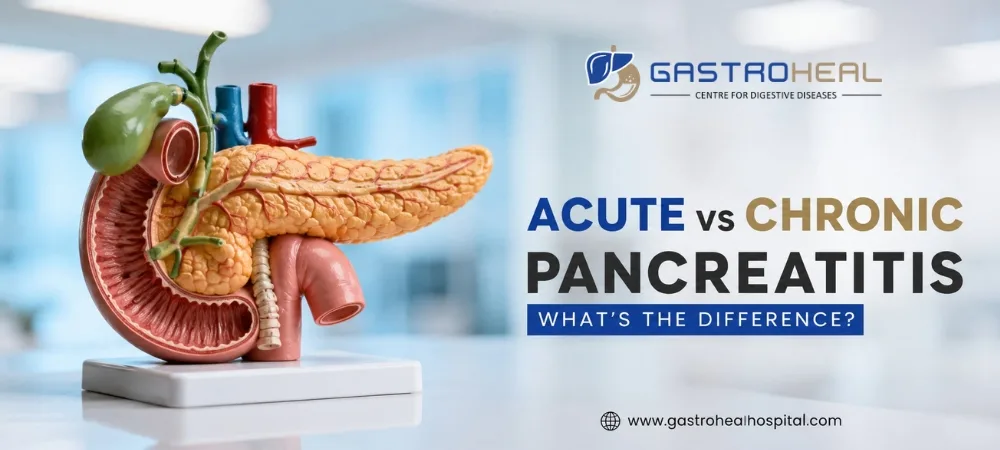
The pancreas is a gland located deep in the upper abdomen, behind the stomach and close to the first part of the small intestine.
It is connected to the digestive system through the pancreatic duct. This duct carries digestive enzymes into the small intestine. The pancreatic duct and common bile duct meet near the intestine, which explains why a gallstone can sometimes block the area and trigger pancreatitis.
Because the pancreas lies deep in the abdomen, pancreatic pain is often felt in the upper abdomen and may spread through to the back.
What does the pancreas do?
The pancreas has two major functions.
1. It helps digest food
The pancreas produces digestive enzymes that break down:
- Fat
- Protein
- Carbohydrates
When chronic pancreatitis reduces enzyme production, food may not be absorbed properly. This can lead to greasy stools, diarrhoea, bloating, nutritional deficiencies, and weight loss.
2. It helps control blood sugar
The pancreas produces insulin and other hormones involved in glucose regulation.
When pancreatic damage becomes extensive, insulin production may fall and diabetes may develop.
What is acute pancreatitis?
Acute pancreatitis is sudden inflammation of the pancreas that generally develops over hours or days.
The illness may range from mild to severe.
Many people improve within several days with hospital-based treatment. However, severe acute pancreatitis can cause pancreatic necrosis, infection, breathing problems, kidney injury, circulatory failure, and other complications requiring intensive care.
Simple example
A person may feel well in the morning, develop severe upper-abdominal pain after a meal, begin vomiting, and need hospital admission later that day.
That sudden onset is typical of acute pancreatitis.
What is chronic pancreatitis?
Chronic pancreatitis is long-term inflammation and scarring that permanently damages the pancreas.
Pain may be recurrent, continuous, or sometimes absent. As the disease progresses, the pancreas may produce fewer digestive enzymes and less insulin.
This can cause:
- Poor digestion
- Greasy or foul-smelling stools
- Weight loss
- Nutritional deficiency
- Diabetes
- Persistent or recurrent pain
Unlike acute pancreatitis, chronic pancreatitis does not normally heal completely because scarred pancreatic tissue cannot be restored to normal.
Acute vs chronic pancreatitis at a glance
| Question | Acute pancreatitis | Chronic pancreatitis |
|---|---|---|
| Does it start suddenly? | Usually yes | Not always |
| Can the pancreas recover? | Often, especially in mild cases | Damage is permanent |
| Is hospital admission common? | Yes | During severe flare-ups or complications |
| Does it affect digestion long term? | Usually not after full recovery | Often does in advanced disease |
| Can it cause diabetes? | Possible, especially after severe damage | Commoner as disease progresses |
| Can it recur? | Yes | It is already a long-term disease |
| Is surgery always required? | No | No, but more patients eventually need procedures |
| Is it dangerous? | Severe attacks can be life-threatening | Long-term complications can be serious |
What causes acute pancreatitis?
Gallstones and alcohol are among the best-known causes, but they are not the only ones.
Gallstones
Gallstones are a leading cause of acute pancreatitis.
A small stone may leave the gallbladder and become lodged near the opening shared by the bile duct and pancreatic duct. This can obstruct pancreatic drainage and trigger inflammation.
This condition is known as gallstone pancreatitis.
Alcohol
Heavy or repeated alcohol exposure can trigger acute pancreatitis in susceptible people.
Not everyone who drinks develops pancreatitis, and alcohol is not responsible for every attack. Nevertheless, continuing alcohol after pancreatitis increases the risk of recurrence and progression to chronic disease.
High triglycerides
Very high triglyceride levels can inflame the pancreas.
Triglycerides are a type of blood fat. People with uncontrolled diabetes, obesity, inherited lipid disorders, certain medicines, or high alcohol intake may be at greater risk.
High calcium
Markedly elevated calcium in the blood can contribute to pancreatitis in selected patients.
Medicines
Some medicines are rarely associated with pancreatitis. A doctor must carefully review the medication history because the connection is often difficult to prove.
Patients should not stop prescribed medicines without medical advice.
ERCP-related pancreatitis
ERCP is an endoscopic procedure used to treat bile-duct or pancreatic-duct obstruction. Although it can be highly beneficial, pancreatitis is a recognised complication in some patients.
Other causes
Less common causes include:
- Abdominal injury
- Infections
- Autoimmune disease
- Genetic conditions
- Pancreatic tumours
- Anatomical variations such as pancreas divisum
- Unknown or idiopathic causes
In some patients, no definite cause is found even after appropriate evaluation.
What causes chronic pancreatitis?
Chronic pancreatitis can result from repeated or persistent pancreatic injury.
Common contributors include:
- Long-term heavy alcohol exposure
- Recurrent acute pancreatitis
- Smoking
- Genetic pancreatic disorders
- Pancreatic duct blockage
- Pancreatic duct stones
- Autoimmune pancreatitis
- High triglycerides
- High calcium
- Anatomical abnormalities
- Unknown causes
Smoking is particularly important because it can increase the risk of progression and may work together with alcohol to worsen pancreatic damage.
Can repeated acute pancreatitis become chronic pancreatitis?
Yes. Recurrent attacks can contribute to permanent pancreatic scarring and chronic pancreatitis in some patients.
The risk depends on:
- The cause of each attack
- Alcohol use
- Smoking
- Genetic factors
- Pancreatic duct abnormalities
- Severity and number of episodes
- Whether the underlying cause is treated
This is why doctors do not focus only on controlling the current attack. They also investigate why it occurred and how another episode can be prevented.
What are the symptoms of acute pancreatitis?
The classic symptom is sudden upper-abdominal pain.
The pain may:
- Begin suddenly or gradually
- Become severe
- Spread to the back
- Last for several days
- Worsen after eating
- Make lying flat uncomfortable
Other symptoms may include:
- Nausea
- Vomiting
- Fever
- Fast heartbeat
- Abdominal swelling
- Abdominal tenderness
- Weakness
- Shortness of breath
- Jaundice in gallstone-related obstruction
People with acute pancreatitis often look and feel seriously unwell.
What are the symptoms of chronic pancreatitis?
Chronic pancreatitis symptoms may develop gradually.
They may include:
- Recurrent upper-abdominal pain
- Pain spreading to the back
- Pain after eating
- Constant abdominal pain
- Nausea
- Bloating
- Diarrhoea
- Greasy, oily, floating, or foul-smelling stools
- Unintentional weight loss
- Reduced appetite
- Diabetes
- Vitamin deficiencies
Some people develop advanced pancreatic damage without severe pain. In others, pain may become less intense as the pancreas loses function, which does not necessarily mean the disease has improved.
Acute and chronic pancreatitis symptoms comparison
| Symptom | Acute pancreatitis | Chronic pancreatitis |
|---|---|---|
| Upper-abdominal pain | Sudden and often severe | Recurrent or persistent |
| Back pain | Common | Common |
| Vomiting | Common | May occur |
| Fever | May occur | Less typical unless complications develop |
| Abdominal tenderness | Common | May be less dramatic |
| Weight loss | Not usually an early feature | Common in advanced disease |
| Greasy stools | Uncommon during a single attack | Common with enzyme deficiency |
| Diabetes | May occur after major damage | Commoner over time |
| Jaundice | Possible with bile-duct blockage | Possible with obstruction or complications |
How does pancreatic pain feel?
Pancreatic pain is commonly described as:
- Deep upper-abdominal pain
- Pain in the centre or left side of the upper abdomen
- Pain that moves through to the back
- Pain that becomes worse after food
- Pain accompanied by vomiting
- Pain that may improve slightly when leaning forward
However, pain pattern alone cannot confirm pancreatitis. Gallbladder disease, ulcers, heart problems, intestinal conditions, liver disease, and other disorders may cause similar pain.
Emergency pancreatitis symptoms checklist
Seek urgent medical care for:
- Severe or worsening upper-abdominal pain
- Repeated vomiting
- Fever or chills
- Fast heartbeat
- Difficulty breathing
- Fainting or extreme weakness
- Confusion
- Yellow eyes or skin
- Very low urine output
- A tense or rapidly swollen abdomen
These symptoms may indicate severe inflammation, infection, bile-duct obstruction, or organ complications. Untreated severe pancreatitis can be fatal.
How is pancreatitis diagnosed?
Doctors diagnose pancreatitis using a combination of:
- Symptoms
- Physical examination
- Blood tests
- Ultrasound
- CT scanning
- MRI or MRCP
- Endoscopic ultrasound in selected patients
- Acute pancreatitis is generally diagnosed when at least two of the following are present:
- Typical upper-abdominal pain
- Elevated pancreatic enzymes, especially lipase
- Imaging findings consistent with acute pancreatitis
Not every person needs every test.
The investigation plan depends on age, severity, likely cause, previous attacks, and whether complications are suspected.
What blood tests are used for pancreatitis?
Lipase
Lipase is a pancreatic enzyme and is generally the preferred blood marker for acute pancreatitis.
A significant elevation, together with typical symptoms, supports the diagnosis.
Amylase
Amylase may also rise, but it can return to normal sooner and may be elevated in other conditions.
Liver-function tests
These can help identify possible gallstone or bile-duct obstruction.
Complete blood count
This may show infection, inflammation, anaemia, or changes related to dehydration.
Kidney-function tests
These help assess dehydration and organ function.
Glucose
Blood sugar may rise during an acute attack or because of chronic pancreatic damage.
Triglycerides and calcium
These are checked when the cause is unclear or when metabolic pancreatitis is suspected.
What does ultrasound show?
An abdominal ultrasound is useful for identifying:
- Gallstones
- Gallbladder inflammation
- Bile-duct widening
- Liver abnormalities
The pancreas may not always be clearly seen because bowel gas can block the view.
Ultrasound is especially valuable when gallstone pancreatitis is suspected.
When is a CT scan used?
A contrast-enhanced CT scan can show:
- Pancreatic swelling
- Fluid collections
- Necrosis
- Infection-related changes
- Pseudocysts
- Bleeding
- Complications involving nearby organs
A CT scan is not always needed immediately in a straightforward mild attack. It is commonly considered when the diagnosis is uncertain, symptoms do not improve, severe disease is suspected, or complications need assessment.
What is MRI and MRCP?
MRI uses magnetic imaging to assess the pancreas and surrounding structures.
MRCP, or magnetic resonance cholangiopancreatography, is a specialised MRI technique that visualises:
- Bile ducts
- Pancreatic ducts
- Duct narrowing
- Duct stones
- Anatomical variations
- Possible obstruction
MRCP is non-invasive and does not require an endoscope to enter the bile duct.
What is endoscopic ultrasound?
Endoscopic ultrasound, or EUS, combines endoscopy with high-frequency ultrasound.
It can provide detailed images of:
- The pancreas
- Pancreatic duct
- Small gallstones
- Bile duct
- Pancreatic masses
- Cysts
- Chronic pancreatitis changes
EUS may be considered when standard scans do not explain recurrent pancreatitis or when a small lesion, duct stone, or tumour is suspected.
What is ERCP?
ERCP stands for endoscopic retrograde cholangiopancreatography.
It is mainly a treatment procedure rather than a routine diagnostic test.
During ERCP, a specialist can:
- Remove bile-duct stones
- Open narrowed ducts
- Place a stent
- Improve bile or pancreatic drainage
- Treat selected duct-related complications
In acute gallstone pancreatitis, ERCP is particularly important when there is ongoing bile-duct obstruction or cholangitis, which is an infection of the bile ducts.
Diagnostic tests comparison
| Test | Main purpose | Acute pancreatitis | Chronic pancreatitis |
|---|---|---|---|
| Lipase | Detect pancreatic inflammation | Very useful | May be normal |
| Ultrasound | Find gallstones and bile-duct changes | Commonly used | Limited for detailed pancreatic changes |
| CT scan | Assess inflammation and complications | Useful in selected cases | Shows calcification, duct changes, complications |
| MRI/MRCP | Evaluate pancreas and ducts | Useful when needed | Helpful for duct anatomy |
| EUS | Detailed pancreatic imaging | Selected cases | Helpful for subtle disease, stones, masses |
| ERCP | Treat duct obstruction | Selected urgent situations | Used for selected duct problems |
What are the complications of acute pancreatitis?
Acute pancreatitis may be mild, moderately severe, or severe.
Possible complications include:
Dehydration and low blood pressure
Vomiting, inflammation, and fluid shifts may reduce circulation.
Breathing problems
Severe inflammation can affect the lungs and oxygen levels.
Kidney injury
Reduced circulation and systemic inflammation may impair kidney function.
Pancreatic necrosis
Necrosis means that part of the pancreatic tissue has died.
Necrosis may remain sterile or become infected.
Infected necrosis
Infection of dead pancreatic tissue is a serious complication that may require antibiotics, drainage, endoscopic procedures, or surgery.
Fluid collections
Fluid may collect around the pancreas during or after an attack.
Pseudocyst
A pancreatic pseudocyst is a mature collection of pancreatic fluid surrounded by a wall. Some remain small and asymptomatic, while others cause pain, infection, bleeding, obstruction, or pressure on nearby organs.
Bleeding
Inflammation can damage nearby blood vessels.
Multi-organ failure
Severe acute pancreatitis can affect the lungs, kidneys, heart, and circulation.
What are the complications of chronic pancreatitis?
Exocrine pancreatic insufficiency
The pancreas may stop producing enough digestive enzymes.
- Greasy stools
- Diarrhoea
- Bloating
- Gas
- Weight loss
- Vitamin deficiencies
- Diabetes
Damage to insulin-producing cells may lead to pancreatic diabetes.
Pancreatic duct stones
Stones may form inside the pancreatic duct and worsen pain or obstruction.
Duct narrowing
Scar tissue can narrow the duct and raise pressure inside the pancreas.
Bile-duct or intestinal obstruction
An enlarged or scarred pancreatic head may press on nearby structures.
Pseudocyst
Long-term fluid collections can develop after repeated inflammation.
Malnutrition
Poor digestion and fear of eating due to pain can lead to loss of muscle and body weight.
Increased pancreatic cancer risk
Chronic pancreatitis is associated with a higher risk of pancreatic cancer compared with the general population, although most people with chronic pancreatitis do not develop cancer.
Complications comparison
| Complication | Acute pancreatitis | Chronic pancreatitis |
|---|---|---|
| Dehydration | Common | Less prominent |
| Organ failure | Possible in severe attacks | Usually linked to advanced complications |
| Necrosis | Important acute complication | Not the usual chronic pattern |
| Pseudocyst | May develop after an attack | May recur or persist |
| Enzyme deficiency | Usually temporary | Common in advanced disease |
| Diabetes | Possible | Commoner with progression |
| Pancreatic duct stones | Uncommon | Common |
| Malnutrition | During prolonged severe illness | Common long-term concern |
| Cancer risk | A single attack does not mean cancer | Risk is increased, but cancer is not inevitable |
Can pancreatitis become pancreatic cancer?
The answer depends on the type of pancreatitis.
A single episode of acute pancreatitis does not normally “turn into” pancreatic cancer.
However:
Pancreatic cancer can occasionally present as pancreatitis.
Chronic pancreatitis is associated with a higher long-term pancreatic cancer risk.
Hereditary pancreatitis may carry a particularly elevated risk.
New or changing symptoms require assessment.
Warning signs that need further investigation include:
- New jaundice
- Progressive weight loss
- A new change in pain pattern
- Worsening diabetes
- A pancreatic mass
- Persistent vomiting
- Unexplained loss of appetite
Having chronic pancreatitis does not mean that cancer will definitely develop.
Can pancreatitis cause diabetes?
Yes.
The pancreas contains cells that produce insulin. Severe acute pancreatic injury or long-term chronic pancreatitis can damage these cells.
Pancreatic diabetes may be more complex than standard type 2 diabetes because both insulin and other pancreatic hormones may be affected.
Patients may need:
- Blood glucose monitoring
- Dietary guidance
- Tablets or insulin
- Enzyme treatment if digestion is also impaired
- Regular follow-up
Chronic pancreatitis-related diabetes should be managed jointly with an appropriate medical team.
How is acute pancreatitis treated?
Acute pancreatitis treatment usually requires hospital assessment.
Intravenous fluids
Fluids help treat dehydration and support circulation.
The amount must be adjusted carefully according to the patient’s heart, kidney, lung, and overall condition.
Pain control
Pancreatic pain can be severe and requires appropriate medication.
Nausea and vomiting treatment
Anti-vomiting medicines may help patients tolerate oral fluids and food.
Early nutrition
Patients with mild acute pancreatitis are generally encouraged to resume oral food when tolerated rather than remain without food for an unnecessarily long period.
People with severe disease who cannot eat may require tube feeding.
Oxygen and organ support
Severe cases may need oxygen, close monitoring, or intensive-care support.
Antibiotics
Antibiotics are not routinely given for every attack because pancreatitis is inflammation, not automatically an infection.
They are used when infection is confirmed or strongly suspected.
Treating the cause
This may include:
- Gallbladder surgery
- ERCP for bile-duct obstruction
- Triglyceride management
- Stopping alcohol
- Reviewing medicines
- Treating high calcium
- Investigating structural or genetic causes
Hospital treatment may include fluids, pain relief, nutrition, and antibiotics when infection is present.
When is ICU care needed?
Intensive-care monitoring may be needed when acute pancreatitis causes:
- Low blood pressure
- Breathing difficulty
- Low oxygen levels
- Kidney injury
- Confusion
- Severe infection
- Persistent organ failure
- Major bleeding
- Extensive pancreatic necrosis
Severe pancreatitis is not treated by surgery alone. It requires coordinated care involving fluids, nutrition, organ support, infection management, imaging, drainage, and specialist decision-making.
How is chronic pancreatitis treated?
The goals are to:
- Reduce pain
- Improve digestion
- Maintain nutrition
- Treat diabetes
- Stop further injury
- Relieve duct obstruction
- Manage complications
- Exclude cancer when necessary
Alcohol and smoking cessation
Patients with pancreatitis are strongly advised to stop alcohol and smoking because continued exposure increases recurrence and progression risks.
Pancreatic enzyme replacement
Enzyme capsules may be prescribed when the pancreas does not produce enough digestive enzymes.
They are generally taken with meals and snacks.
They can help:
- Improve fat absorption
- Reduce greasy stools
- Reduce weight loss
- Improve nutrition
Nutritional treatment
Patients may need:
- More frequent meals
- Adequate protein
- Enzyme replacement
- Vitamin supplementation
- Dietitian guidance
- Diabetes care
Pain treatment
Pain management may include:
- Lifestyle changes
- Appropriate medicines
- Enzyme therapy when indicated
- Endoscopic procedures
- Nerve interventions
- Surgery in selected patients
Repeated long-term painkiller use without addressing duct obstruction, stones, pseudocyst, or other causes may delay definitive treatment.
What endoscopic treatments are used?
Endoscopic treatment may be useful for selected patients with:
- Pancreatic duct stones
- Duct narrowing
- Bile-duct obstruction
- Symptomatic pseudocysts
- Pancreatic fluid collections
- Recurrent pancreatitis linked to obstruction
Procedures may include:
- ERCP
- Pancreatic duct stenting
- Stone extraction
- Endoscopic drainage
- EUS-guided procedures
Some pancreatic duct stones may first need shock-wave treatment before endoscopic removal. Current guidance supports treating obstructive duct stones in selected patients with painful chronic pancreatitis.
When is surgery needed for pancreatitis?
Surgery is not required for every patient.
It may be considered when there is:
- Persistent severe pain despite appropriate treatment
- A blocked or enlarged pancreatic duct
- Large pancreatic duct stones
- Recurrent pancreatitis due to structural disease
- Infected pancreatic necrosis not controlled by less invasive methods
- A complicated pseudocyst
- Bleeding
- Bile-duct or intestinal obstruction
- A damaged part of the pancreas
- Suspicion of pancreatic cancer
- A pancreatic mass
- Disconnected pancreatic duct
- Complications affecting nearby organs
The exact operation depends on anatomy and disease pattern.
Some operations drain an enlarged pancreatic duct. Others remove a severely damaged part of the pancreas. Complex disease in the pancreatic head may require a combined drainage and resection procedure.
Treatment must be individualised after reviewing symptoms, scans, pancreatic function, and previous procedures. Surgery may relieve duct pressure or remove damaged or infected pancreatic tissue in selected patients.
When is gallbladder surgery needed after gallstone pancreatitis?
If gallstones caused the pancreatitis, removing the gallbladder helps reduce the risk of another gallstone-related attack.
For mild gallstone pancreatitis, laparoscopic gallbladder removal is often planned during the same admission after the patient stabilises.
In severe pancreatitis, surgery may be delayed until inflammation and fluid collections improve.
If a bile-duct stone is causing obstruction or cholangitis, ERCP may be needed before or around the time of gallbladder treatment.
The correct timing depends on:
- Severity of pancreatitis
- Ongoing bile-duct obstruction
- Infection
- Fluid collections
- Anaesthesia fitness
- Overall clinical recovery
Acute vs chronic pancreatitis treatment comparison
| Treatment area | Acute pancreatitis | Chronic pancreatitis |
|---|---|---|
| Hospital admission | Common | During severe symptoms or complications |
| IV fluids | Important early treatment | Used during flare-ups if needed |
| Pain relief | Essential | Often part of long-term care |
| Oral feeding | Restart when tolerated | Regular nutrition with enzymes when needed |
| Antibiotics | Only for infection | Only for infection or selected complications |
| Enzyme capsules | Not routinely needed after mild recovery | Common when digestion is impaired |
| Diabetes care | If blood sugar remains abnormal | Often required |
| ERCP | For selected bile-duct or duct obstruction | For selected duct stones or strictures |
| Surgery | For complications or underlying causes | For pain, obstruction, stones, complications, or suspected cancer |
What should you eat after acute pancreatitis?
Diet should be personalised according to severity, tolerance, gallbladder disease, triglycerides, diabetes, and nutritional status.
General principles include:
- Restart food when medically appropriate
- Choose smaller, more frequent meals
- Avoid very heavy and oily meals
- Include adequate protein
- Maintain hydration
- Avoid alcohol completely
- Follow a low-fat plan if advised
- Treat gallstones or high triglycerides appropriately
Patients recovering from severe pancreatitis may need structured nutritional support rather than a simple list of foods.
What foods can be eaten after pancreatitis?
Depending on tolerance and medical advice, suitable choices may include:
- Rice
- Chapati with limited oil
- Oats
- Dalia
- Moong dal
- Well-cooked vegetables
- Low-fat curd when tolerated
- Lean protein
- Egg whites
- Fruits in suitable portions
- Soups
- Khichdi
- Adequate water
People with chronic pancreatitis should not unnecessarily reduce dietary fat to the point of malnutrition. Enzyme replacement may allow better absorption and a more balanced diet.
What foods should be avoided?
Common items to limit or avoid include:
- Alcohol
- Deep-fried snacks
- Very oily curries
- High-fat restaurant meals
- Large portions of butter or ghee
- Processed meats
- Sugary drinks
- Excess sweets when triglycerides or diabetes are present
- Heavy late-night meals
- Tobacco in all forms
A diet plan should address the actual cause. For example, a patient with high triglycerides may need a different plan from someone with gallstones or chronic enzyme deficiency.
Foods to eat vs foods to limit
| Prefer more often | Limit or avoid |
|---|---|
| Simple home-cooked meals | Deep-fried food |
| Lean protein | Fatty or processed meat |
| Cooked vegetables | Very oily gravies |
| Rice, oats, dalia | Large high-fat portions |
| Fruits in suitable portions | Excess sugary drinks |
| Low-fat dairy if tolerated | Alcohol |
| Adequate fluids | Tobacco |
| Meals advised by a dietitian | Extreme crash diets |
Can alcohol be taken after pancreatitis?
Alcohol should generally be avoided after pancreatitis.
Continuing alcohol use can cause:
- Another acute attack
- Progression to chronic pancreatitis
- More severe complications
- Malnutrition
- Liver disease
- Poor pain control
- Increased cancer risk when combined with smoking
People who find it difficult to stop should seek professional support rather than trying to manage dependence alone.
Why is stopping smoking important?
Smoking independently harms pancreatic health and can increase progression from acute to chronic pancreatitis.
It is also associated with pancreatic cancer risk and often worsens the effect of alcohol.
Stopping smoking is part of medical treatment, not merely general lifestyle advice.
How can pancreatitis recurrence be prevented?
Prevention depends on the cause.
A practical plan may include:
- Treat gallstones:Gallbladder removal may be recommended after gallstone pancreatitis.
- Avoid alcohol: Even another period of heavy use may trigger recurrence.
- Stop smoking: Smoking contributes to progression and complications.
- Control triglycerides: Follow medical treatment, diabetes control, and nutritional advice.
- Review medicines: Do this with a doctor, not independently.
- Treat high calcium: Investigate the cause.
- Evaluate recurrent attacks: MRCP, EUS, genetic assessment, or other tests may be needed.
- Manage duct obstruction: Endoscopic or surgical treatment may reduce recurrence in selected patients.
- Follow up after severe pancreatitis: Fluid collections and necrosis may need monitoring.
- Take enzyme capsules correctly: When prescribed for chronic pancreatic insufficiency.
Common myths about pancreatitis
Myth 1: Pancreatitis only happens because of alcohol
Fact: Gallstones, high triglycerides, medicines, duct abnormalities, genetics, autoimmune disease, trauma, and other causes may also trigger pancreatitis.
Myth 2: Every pancreatitis patient needs surgery
Fact: Most acute attacks are initially treated medically. Surgery is reserved for gallstone prevention, complications, chronic obstruction, persistent pain, or other specific indications.
Myth 3: Normal amylase means there is no pancreatitis
Fact: Lipase is generally more useful, and chronic pancreatitis may occur with normal enzyme levels.
Myth 4: Once the pain improves, the cause no longer matters
Fact: Unless the cause is addressed, another attack may occur.
Myth 5: Chronic pancreatitis is just repeated acidity
Fact: It is permanent pancreatic damage and may cause malabsorption, diabetes, stones, strictures, and other complications.
Myth 6: Pancreatitis always becomes cancer
Fact: It does not. Chronic pancreatitis raises risk, but most patients do not develop pancreatic cancer.
Myth 7: Patients should stop eating for many days
Fact: Modern acute pancreatitis care generally supports restarting oral or enteral nutrition as soon as it is safely tolerated.
When should you consult a Surgical Gastroenterologist?
A Surgical Gastroenterologist may be needed when:
- Pancreatitis keeps returning
- Gallstones caused an attack
- Scans show pancreatic necrosis
- A pseudocyst or fluid collection persists
- The pancreatic duct is enlarged or blocked
- Pancreatic stones are present
- Pain continues despite medical treatment
- There is bile-duct or intestinal obstruction
- Weight loss and greasy stools suggest pancreatic insufficiency
- A pancreatic mass is found
- Cancer cannot be excluded
- Surgery or drainage has been recommended
- You need a second opinion for complex pancreatic disease
Not every pancreatitis patient requires surgery. A specialist’s role is to determine whether continued medical care, endoscopy, drainage, or surgery is most appropriate.
Meet Dr. Prem Shah
Dr. Prem Shah is a formally trained Surgical Gastroenterologist based in Anand.
He completed General Surgery training at Shree Krishna Hospital, Karamsad, followed by superspeciality training in Surgical Gastroenterology at Seth G.S. Medical College and KEM Hospital, Mumbai. His training included exposure to hepatopancreatobiliary surgery, pancreatic disease, GI cancers, colorectal surgery, and advanced laparoscopic procedures.
His qualifications and fellowships include:
- MBBS
- MS in General Surgery
- DrNB in Surgical Gastroenterology
- FMAS
- FIAGES
- FACRSI
- At Gastroheal, Dr. Prem Shah evaluates patients with:
- Acute pancreatitis
- Recurrent pancreatitis
- Chronic pancreatitis
- Gallstone-related pancreatic disease
- Pancreatic duct stones
- Pancreatic pseudocysts
- Pancreatic tumours
- Complex pancreatic surgical conditions
The objective is not to recommend surgery to every patient. It is to identify the cause, recognise complications, and choose the safest evidence-based treatment.
Why consult Gastroheal for pancreatic disease in Anand?
Gastroheal – Centre for Digestive Diseases is located at Dr. Mahendra Shah Hospital in Anand.
The centre provides surgical care for gastrointestinal, liver, pancreatic, biliary, and colorectal conditions. Its listed services include pancreatic surgery, liver and biliary surgery, GI cancer surgery, and advanced laparoscopic surgery.
For patients from Anand, Kheda, Nadiad, Karamsad, Petlad, Borsad, Vallabh Vidyanagar, and Central Gujarat, local specialist availability may support:
- Earlier pancreatic evaluation
- Review of CT, MRI, MRCP, and EUS findings
- Gallstone pancreatitis planning
- Second opinions
- Pancreatic surgery assessment
- Follow-up closer to home
- Coordination with physicians, gastroenterologists, radiologists, and critical-care teams
The facility’s current website lists Gastroheal at Dr. Mahendra Shah Hospital, opposite C.P. College on Bhalej Road, Anand.
Quick summary
- Acute pancreatitis is sudden and usually short term.
- Chronic pancreatitis causes permanent pancreatic scarring.
- Gallstones and alcohol are common causes.
- Severe upper-abdominal pain spreading to the back is a key warning symptom.
- Acute pancreatitis often requires hospital care.
- Chronic pancreatitis can cause poor digestion, weight loss, and diabetes.
- A single acute attack does not automatically become chronic disease.
- Recurrent attacks increase the risk of permanent damage.
- Gallstone pancreatitis may require gallbladder removal after recovery.
- ERCP is used for selected bile-duct or pancreatic-duct obstruction.
- Surgery is not needed for every patient.
- Alcohol and smoking should be stopped.
- Chronic pancreatitis increases cancer risk, but cancer is not inevitable.
- Persistent or complicated pancreatic disease should be reviewed by an appropriate specialist.
FAQs
What is the main difference between acute and chronic pancreatitis? ▼
How serious is acute pancreatitis? ▼
Can acute pancreatitis be completely cured? ▼
Can chronic pancreatitis be cured? ▼
What causes acute pancreatitis most commonly? ▼
What causes chronic pancreatitis? ▼
Can gallstones cause pancreatitis? ▼
Is gallbladder removal necessary after pancreatitis? ▼
Can alcohol cause pancreatitis after one drinking episode? ▼
Can pancreatitis happen without alcohol? ▼
Where is pancreatic pain felt? ▼
Does pancreatitis always cause severe pain? ▼
Can pancreatitis cause back pain? ▼
Can pancreatitis cause jaundice? ▼
How is acute pancreatitis diagnosed? ▼
Consult Dr. Prem Shah at Gastroheal
Seek medical assessment if you experience:
- Severe upper-abdominal pain
- Pain spreading to the back
- Repeated vomiting
- Recurrent pancreatitis
- Gallstones with pancreatic inflammation
- Persistent weight loss
- Greasy stools
- A pancreatic cyst, stone, or mass
- Jaundice
- A recommendation for pancreatic surgery
Dr. Prem Shah, Surgical Gastroenterologist
Gastroheal – Centre for Digestive Diseases
Dr. Mahendra Shah Hospital
Anand, Gujarat
Severe abdominal pain, repeated vomiting, fever, breathing difficulty, jaundice, fainting, or rapidly worsening symptoms require urgent hospital care rather than a routine appointment.
Medical disclaimer
This article is intended for general education and awareness. It does not replace a personal consultation, physical examination, diagnosis, or treatment plan from a qualified healthcare professional. Pancreatitis can become a medical emergency. Seek immediate hospital care for severe abdominal pain, repeated vomiting, fever, jaundice, breathing difficulty, fainting, confusion, or rapidly worsening symptoms.